Decorative instrument · Past project
Pug-a-lele
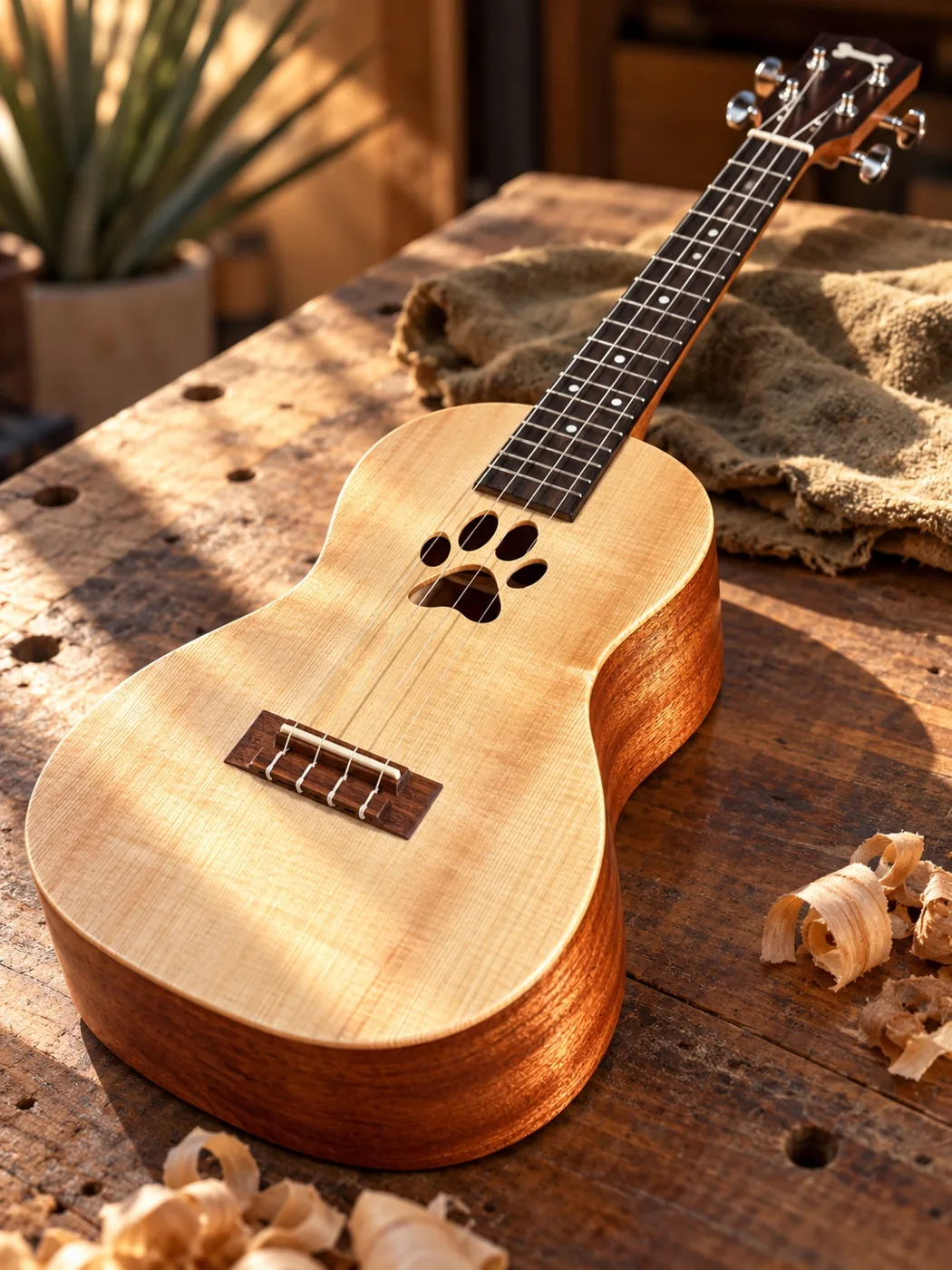
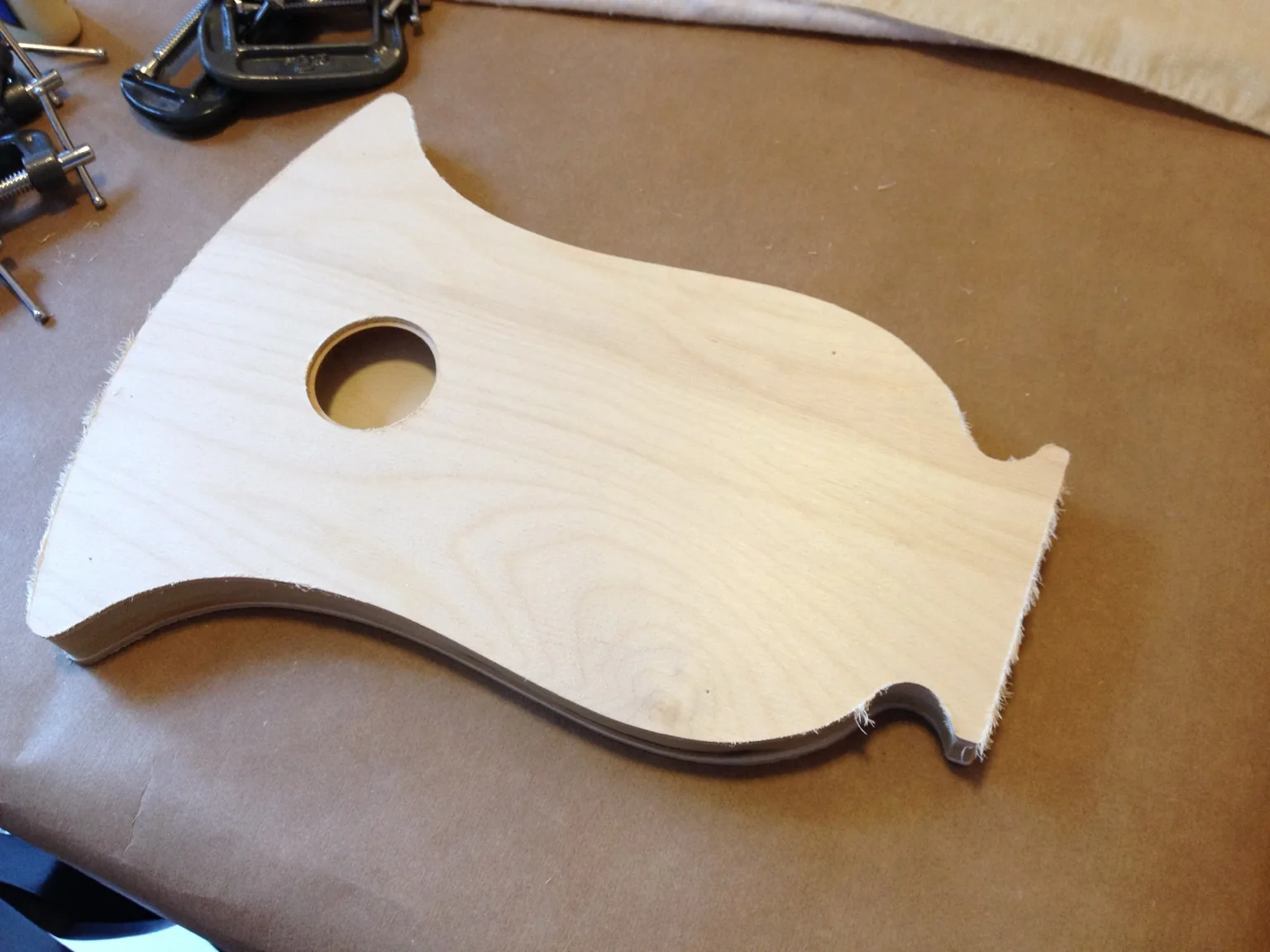
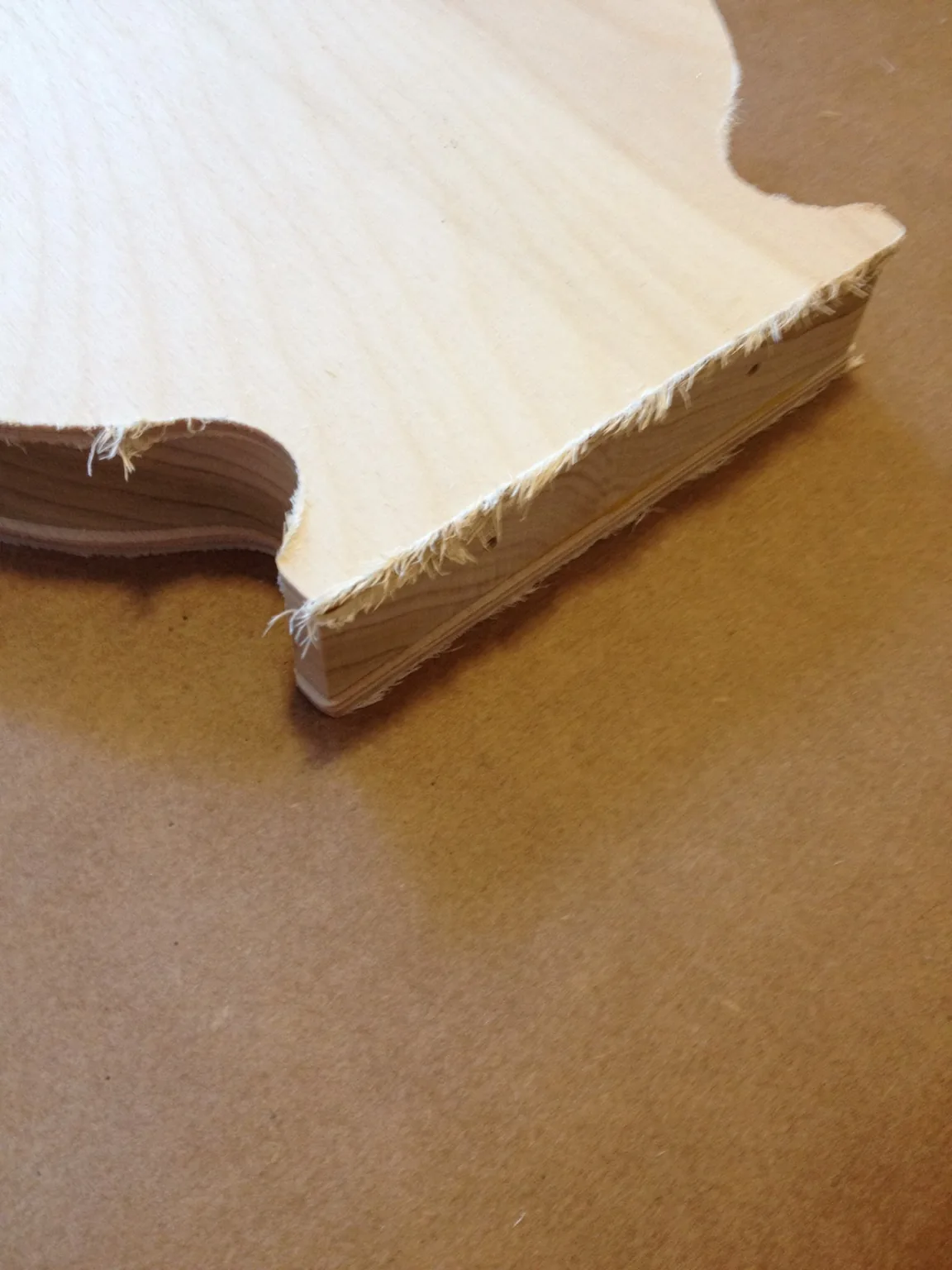
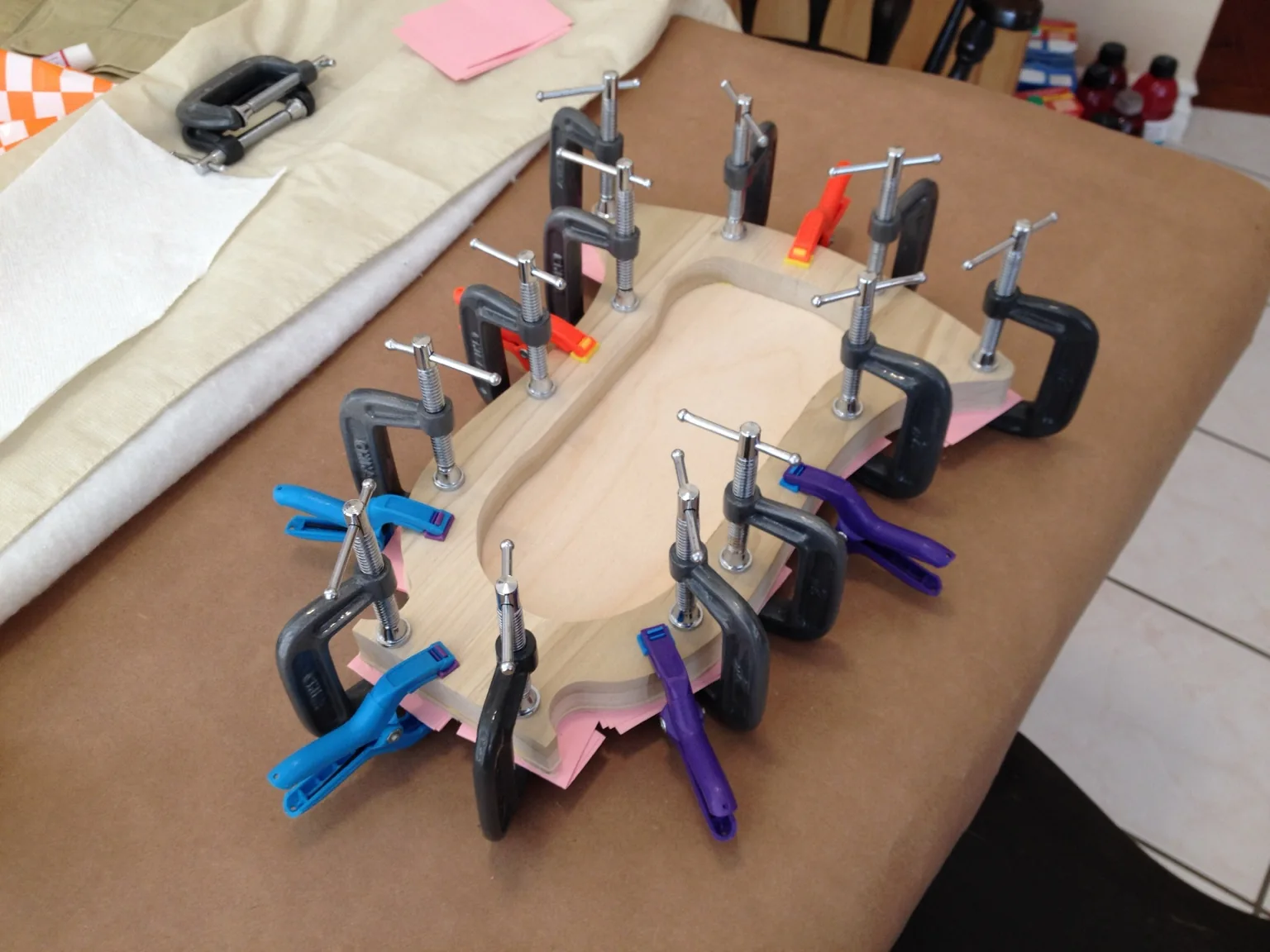
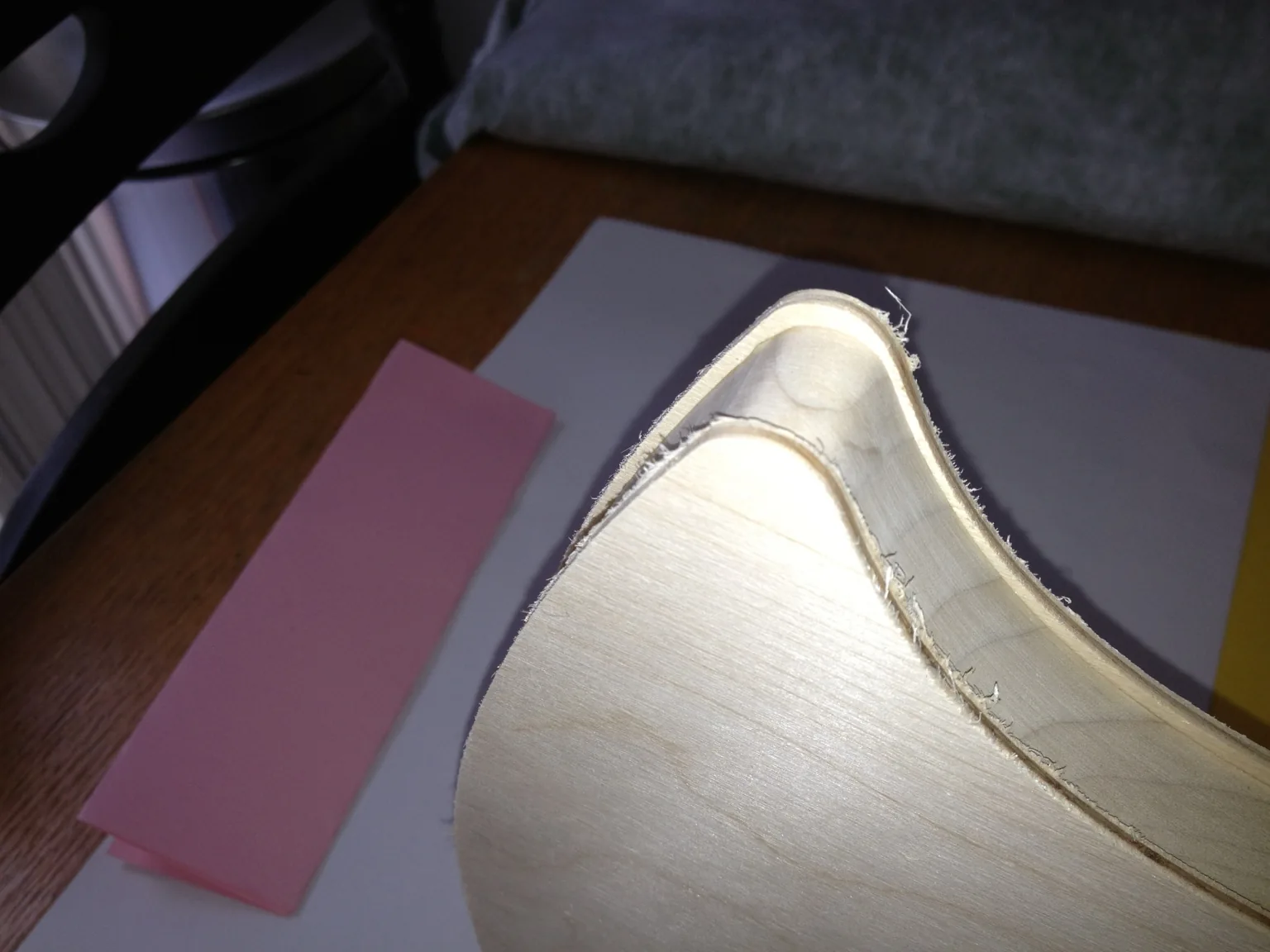
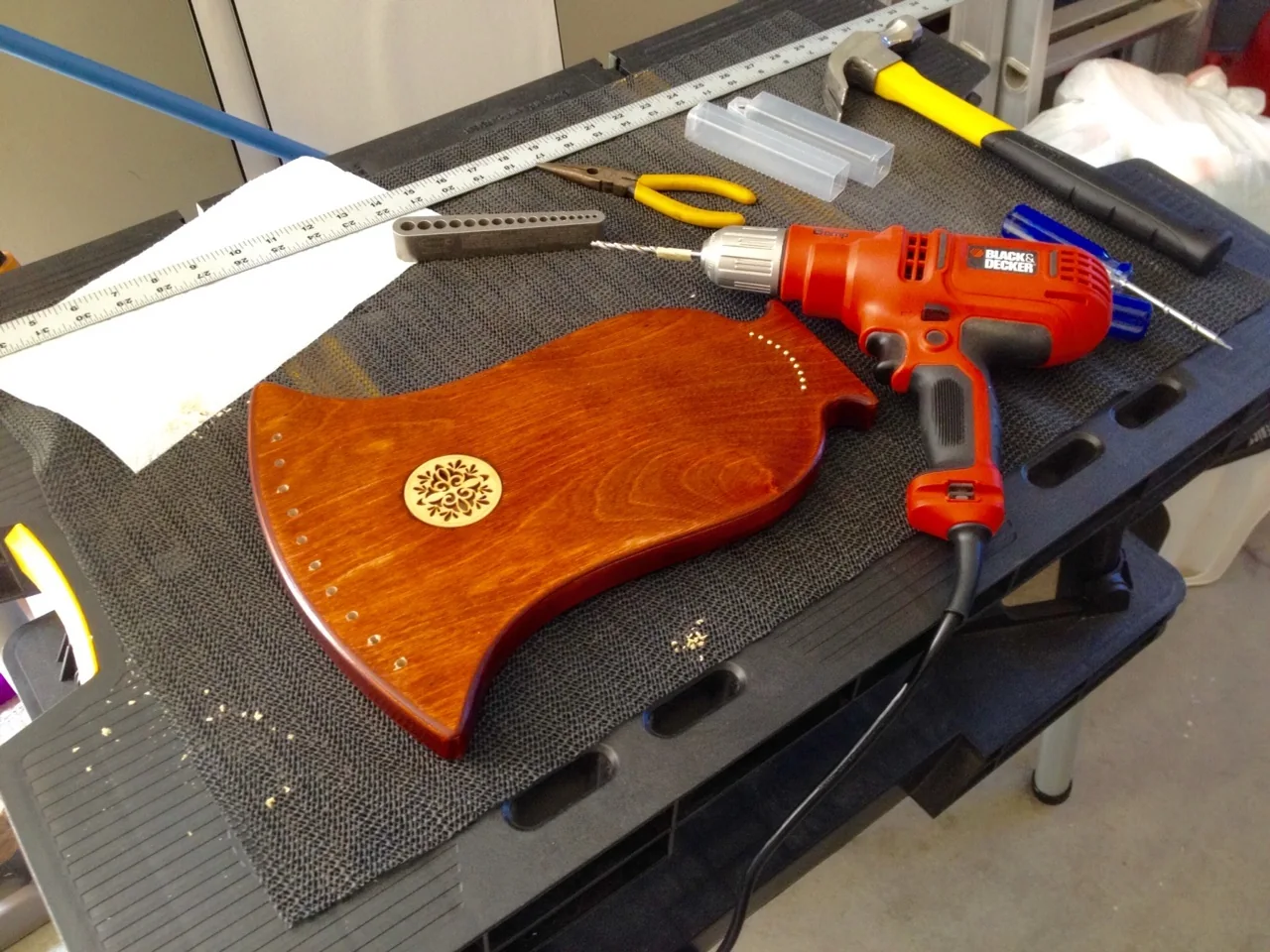
A handcrafted ukulele with distinctive paw-print sound holes. From shaping the soundboard to assembling the body, these photographs document the making of the Pug-a-lele.
Functional Art
Inspired by the High Desert
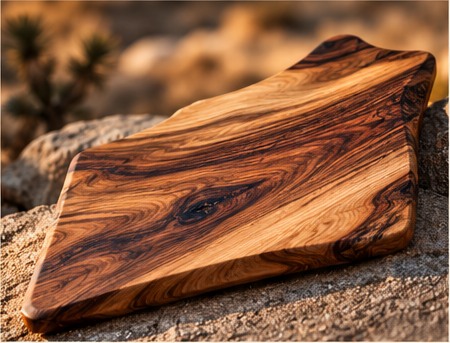
Each piece is crafted to highlight the natural beauty, chatoyance, and unique character of wood. Inspired by the rugged landscape of Joshua Tree, our work celebrates the wonder of wood and the stories it carries.
View Our Work →Explore the extraordinary world of wood — from the hidden light of chatoyance to its cosmic rarity — and discover what makes this remarkable material so special.
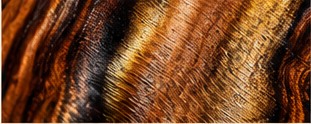
The science behind wood's shimmering beauty and what makes it so rare.
Read the article →
From ancient trees to the stars, a journey through time, science, and wonder.
Read the article → Our WorkWood art and handcrafted boardsExplore →
 The Beauty & Wonder of WoodNature, science, inspirationLearn more →
 AboutOur story and inspirationRead more →
 ContactGet in touchLet's connect →
Wood's natural figure is the artwork. We shape, finish, and celebrate it without overpowering its character.
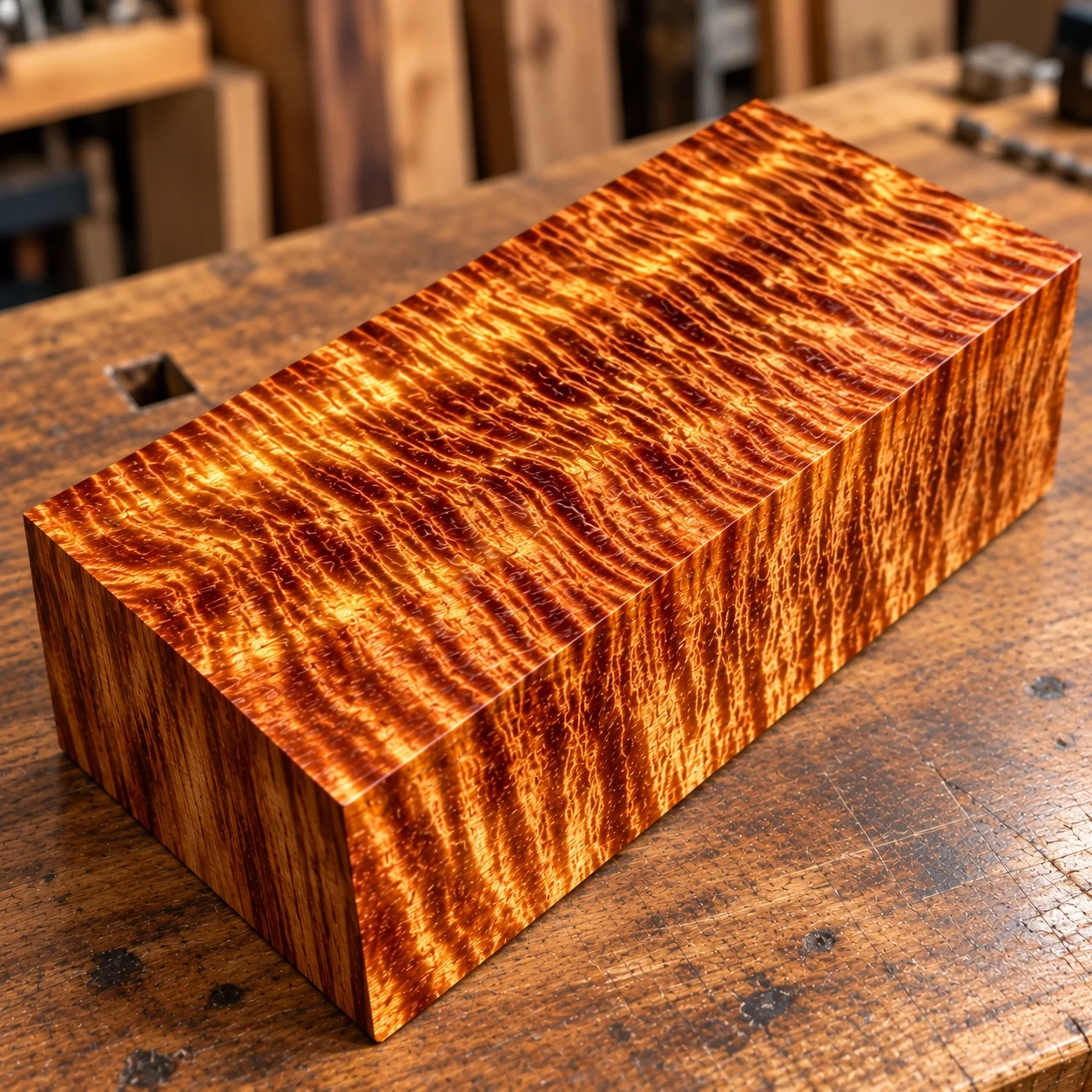
One-of-a-kind pieces that reveal wood's shimmering depth and movement.
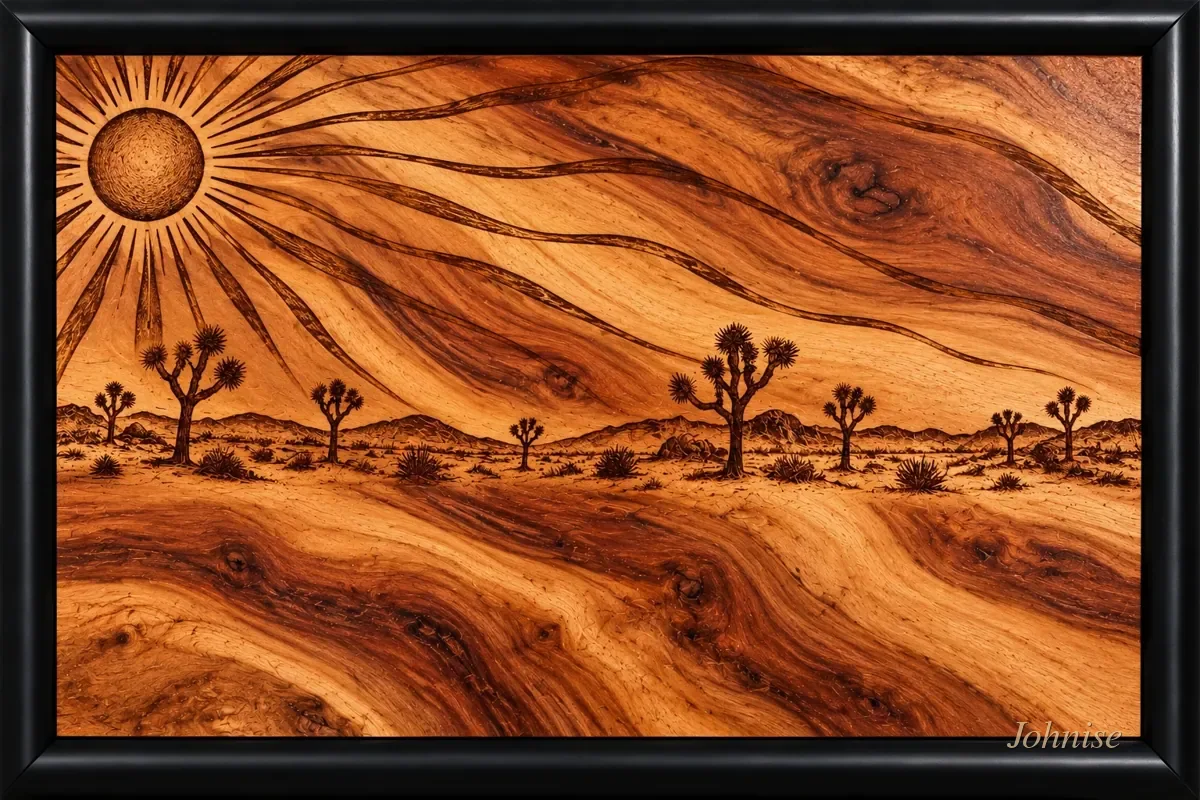
Decorative artwork inspired by the grain and spirit of the high desert.
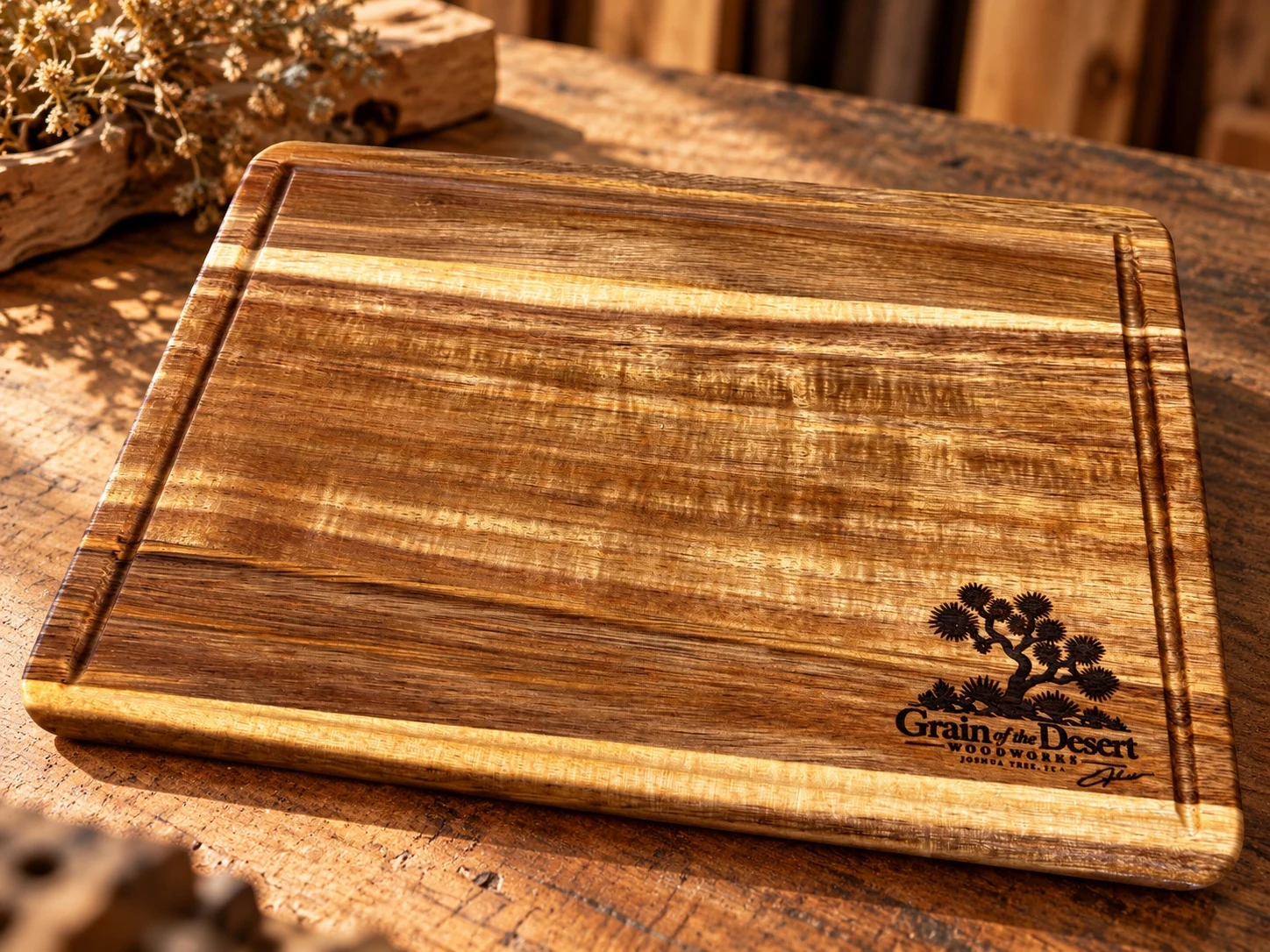
Functional pieces made to bring warmth and character to everyday use.
Natural grain, graceful shapes, and thoughtful presentation.
Beyond functional boards, our workshop has been home to one-of-a-kind instruments and experiments in wood finishing. These are selected creations, shared to celebrate the making.
A handcrafted ukulele with distinctive paw-print sound holes. From shaping the soundboard to assembling the body, these photographs document the making of the Pug-a-lele.

John finished this mahogany SG-style guitar with boiled linseed oil and thinned alkyd varnish. The authentic construction and finished photographs reveal the natural figure and changing luster of the wood.
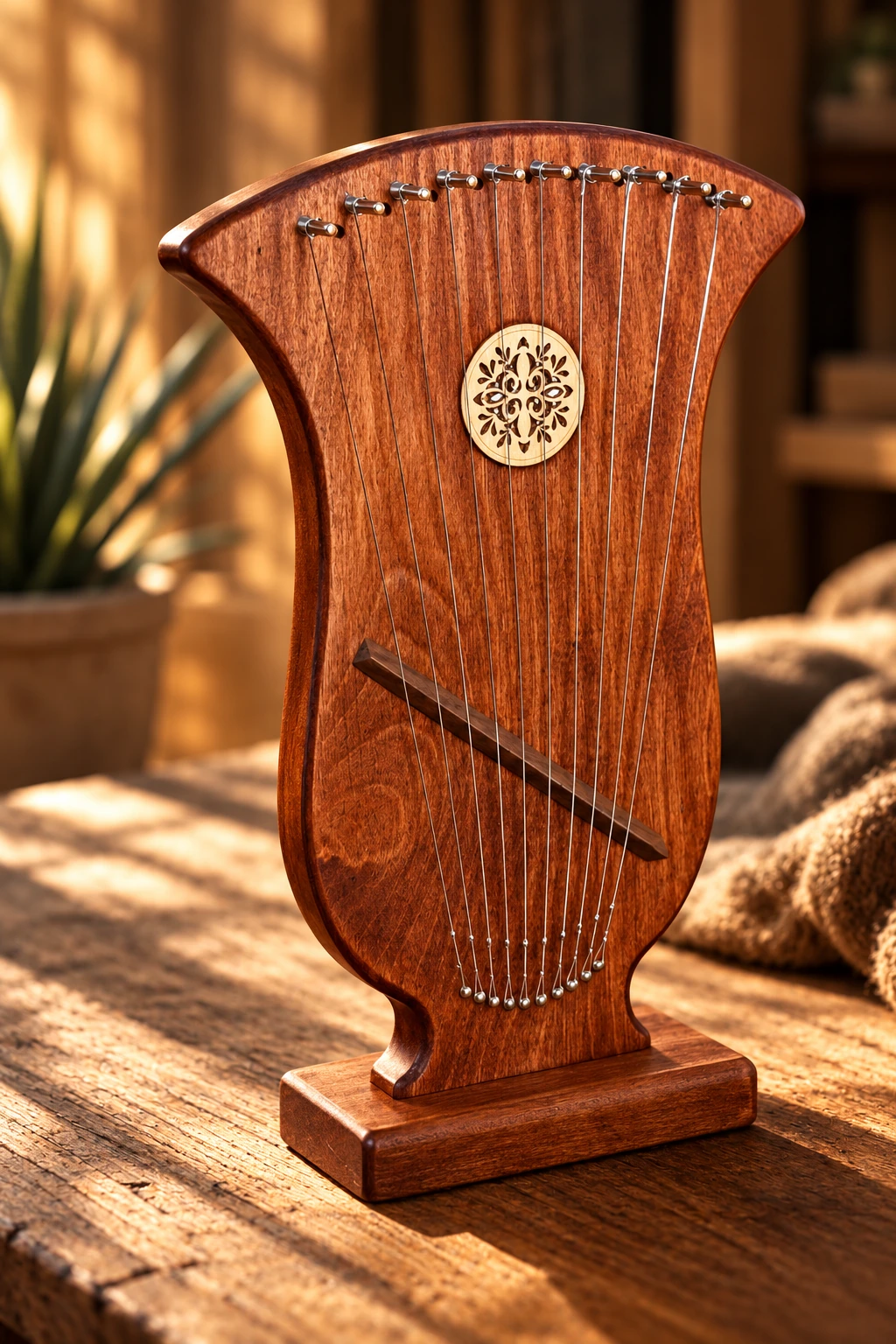
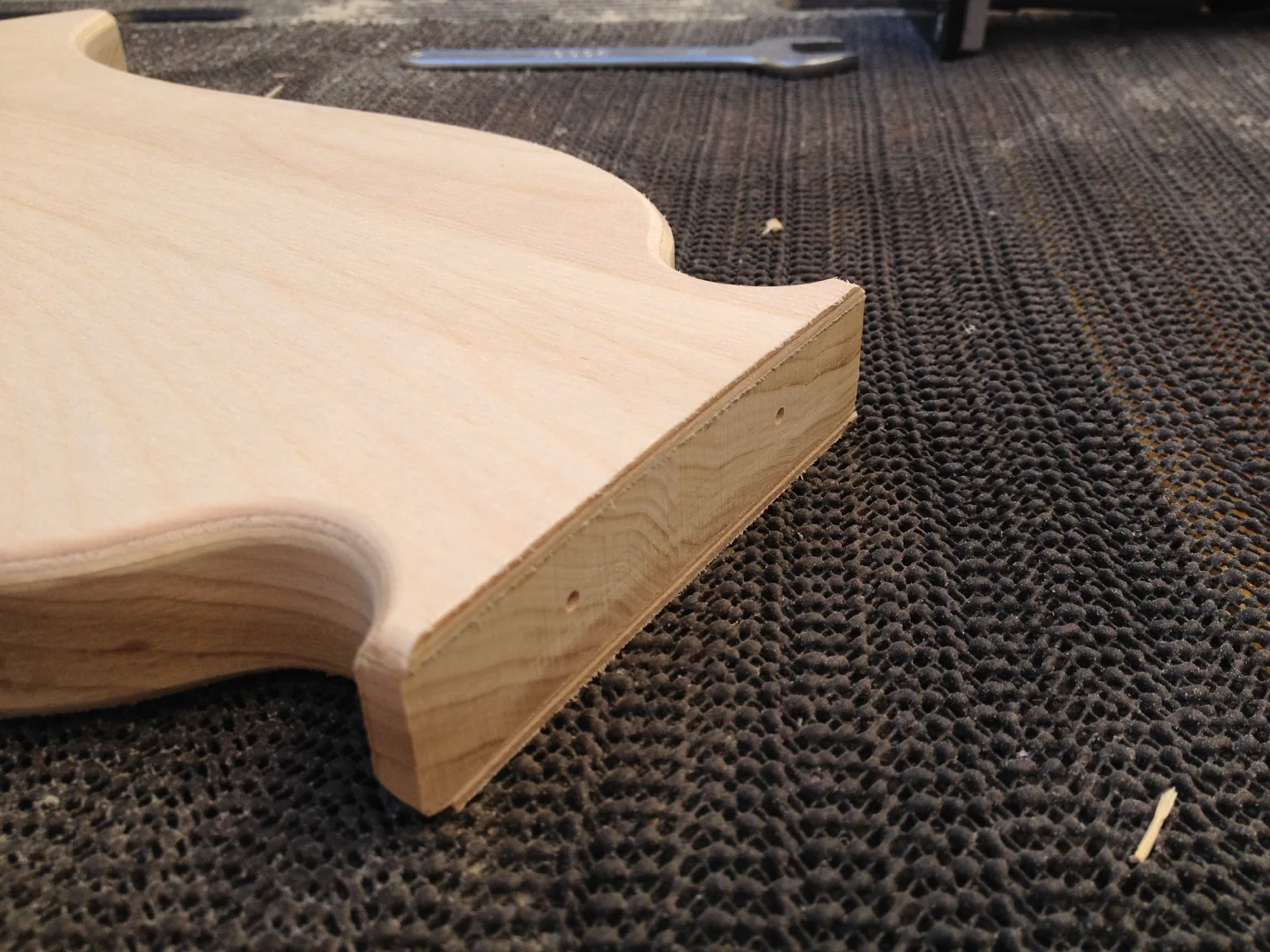
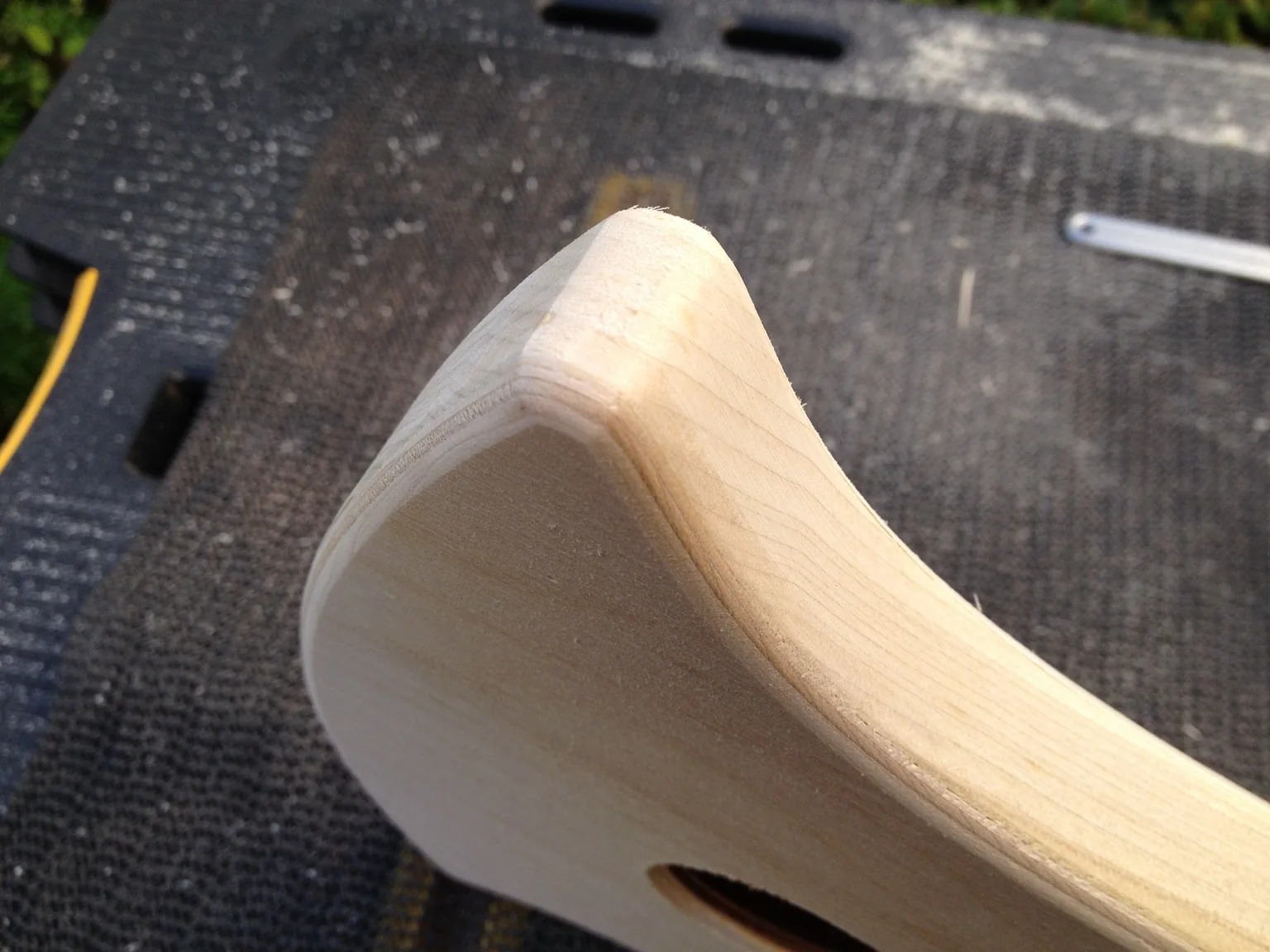
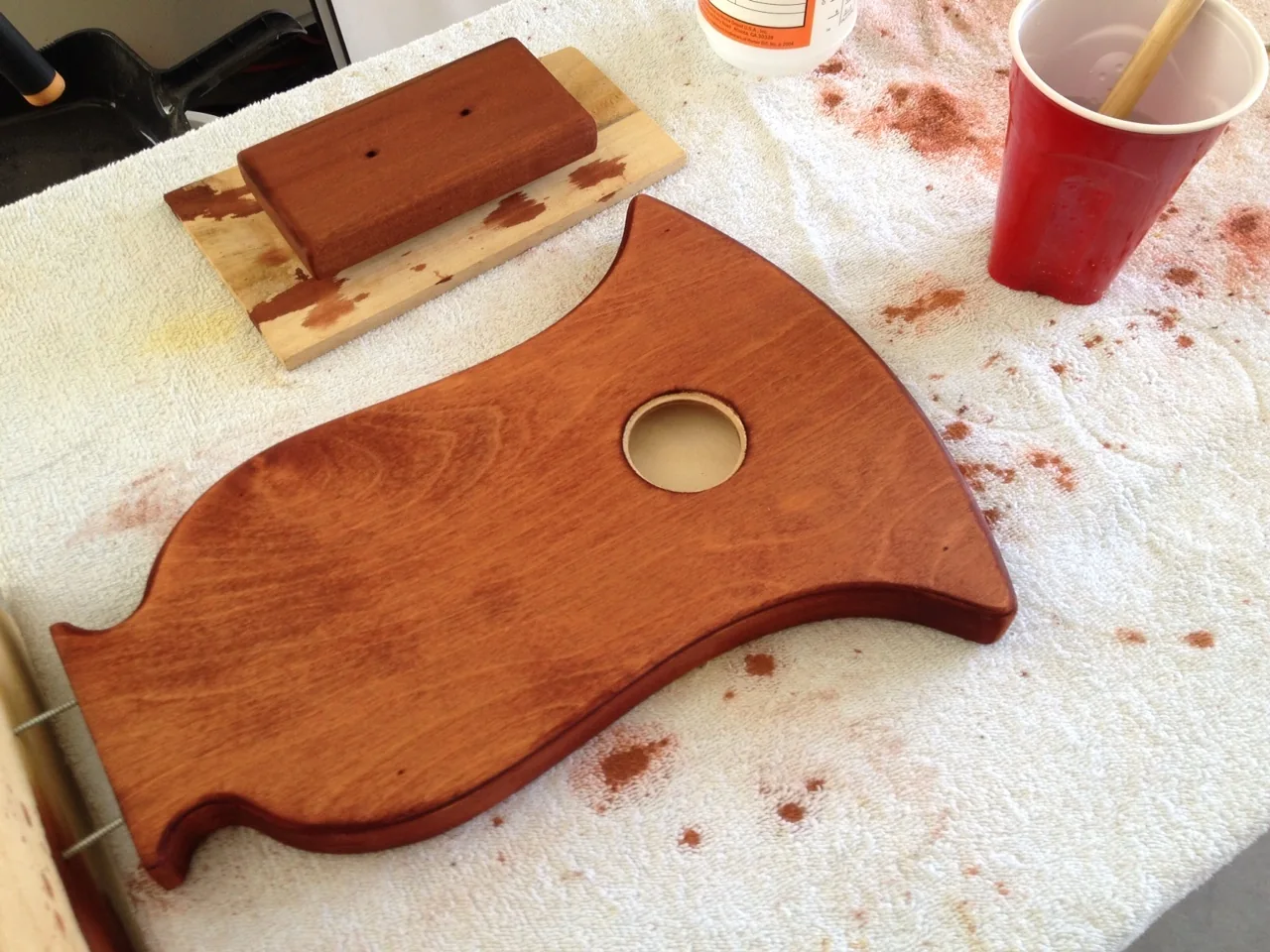
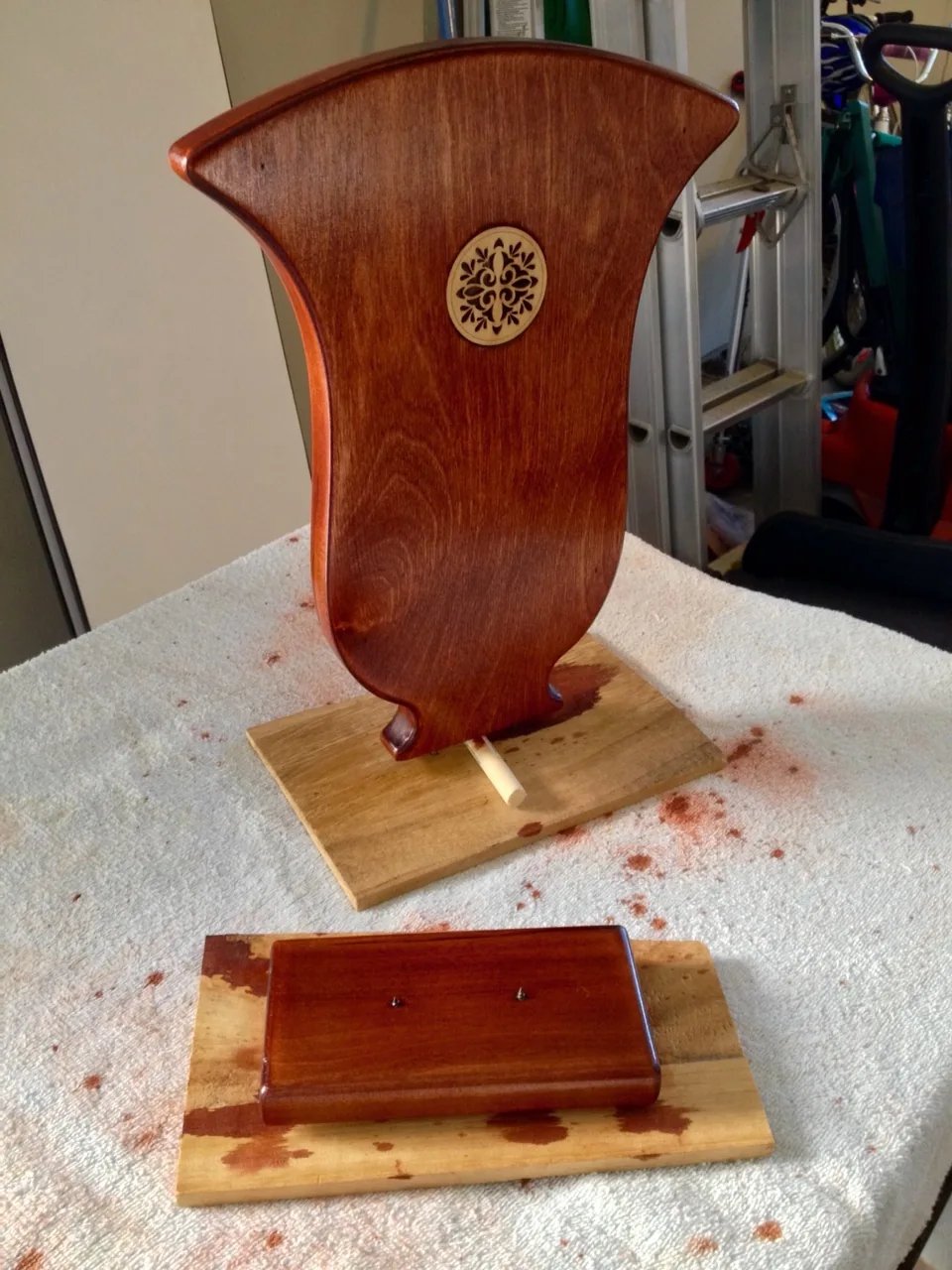
Crafted with a poplar body and Baltic birch soundboards on both sides. John used General Finishes Cinnamon dye and thinned alkyd varnish.
Authentic photographs documenting the instrument’s construction.
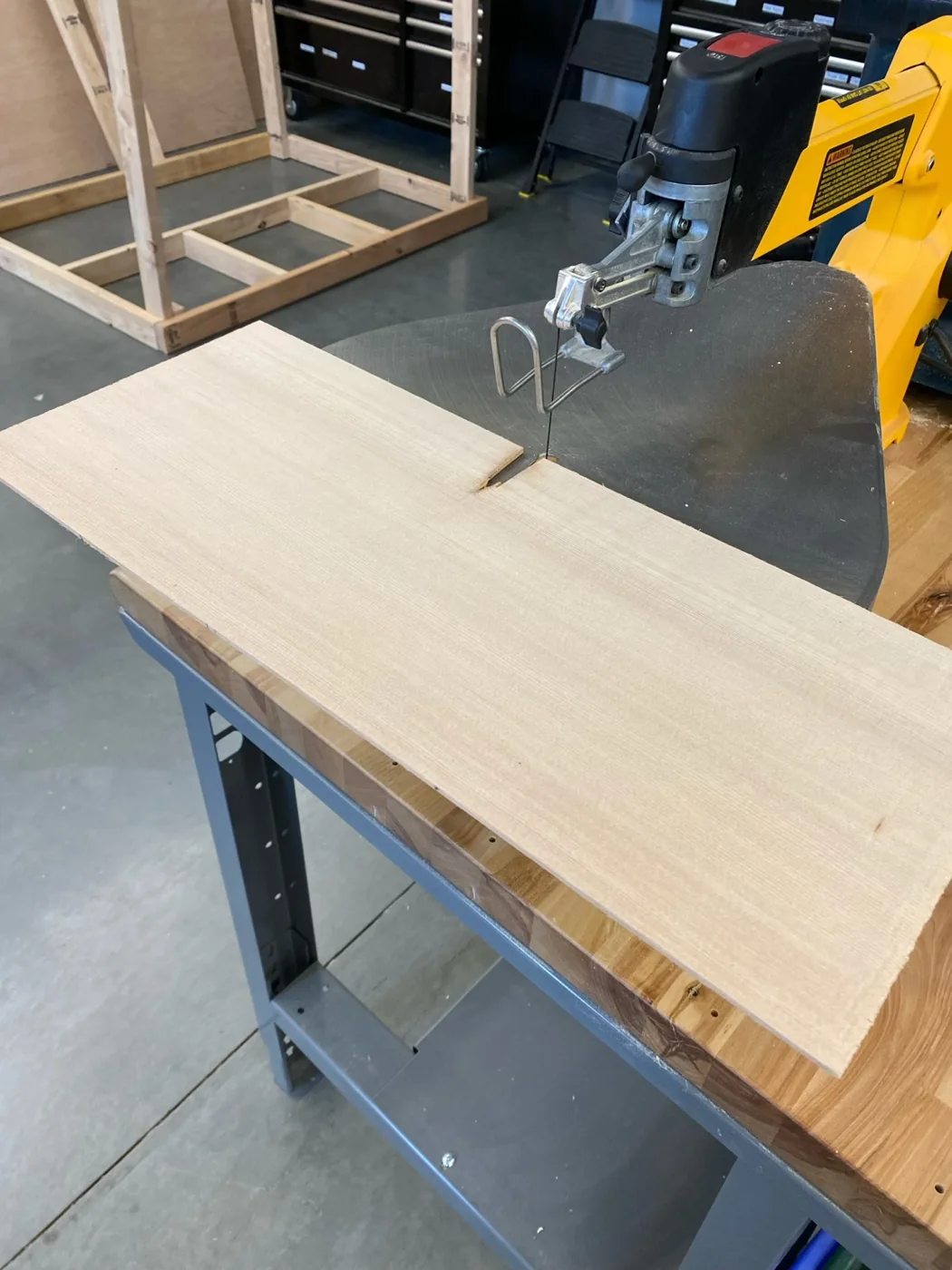
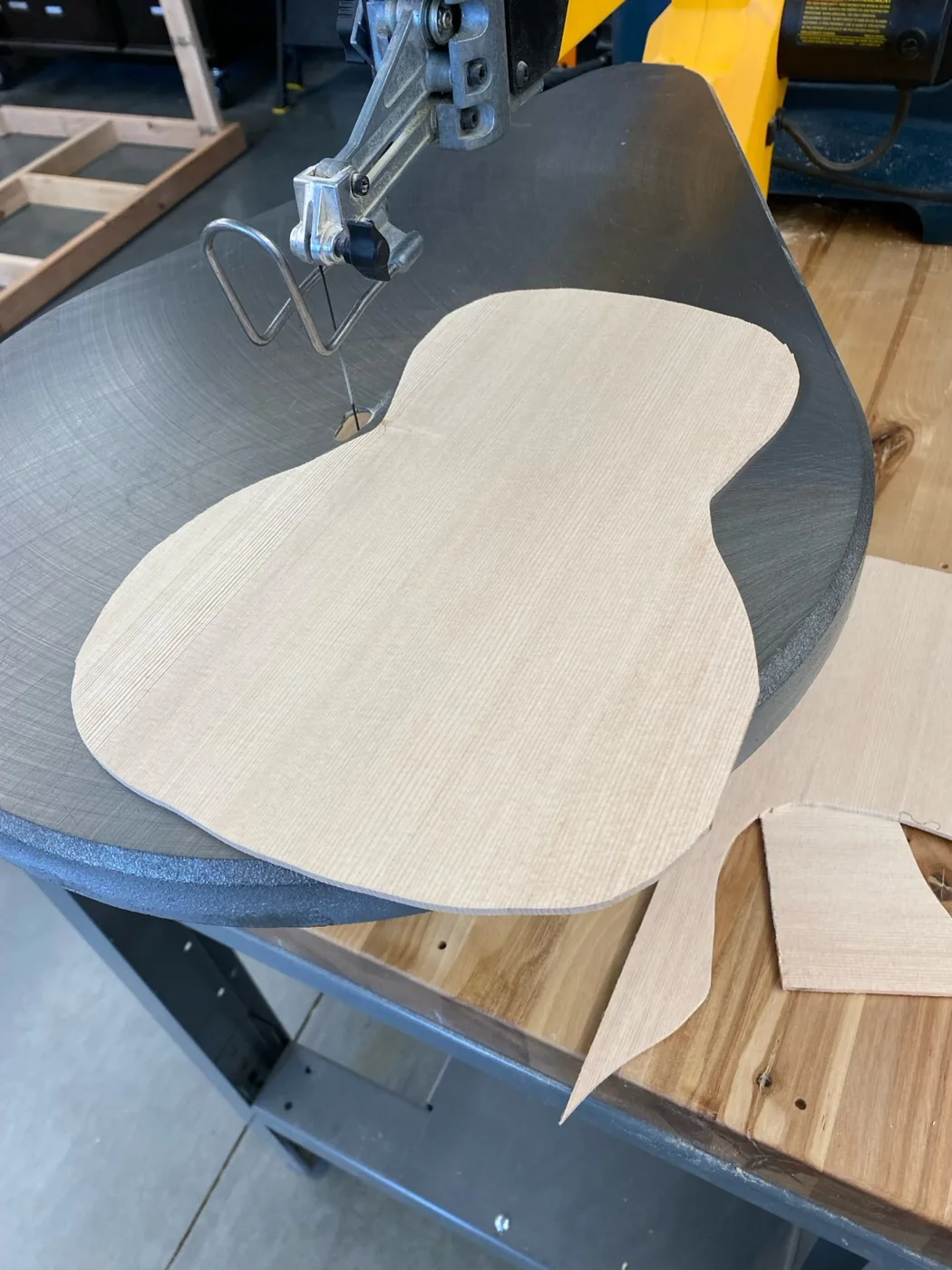
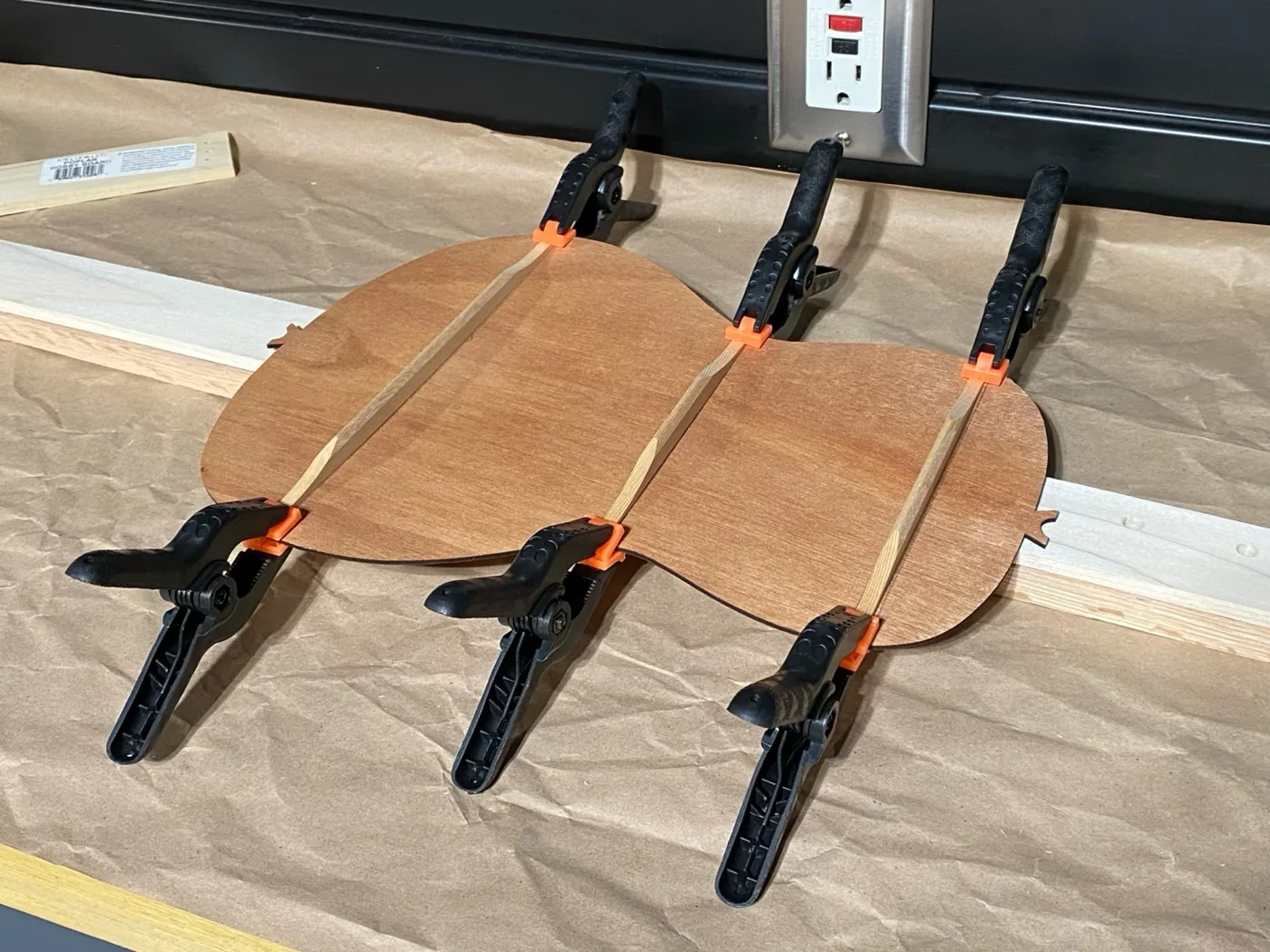
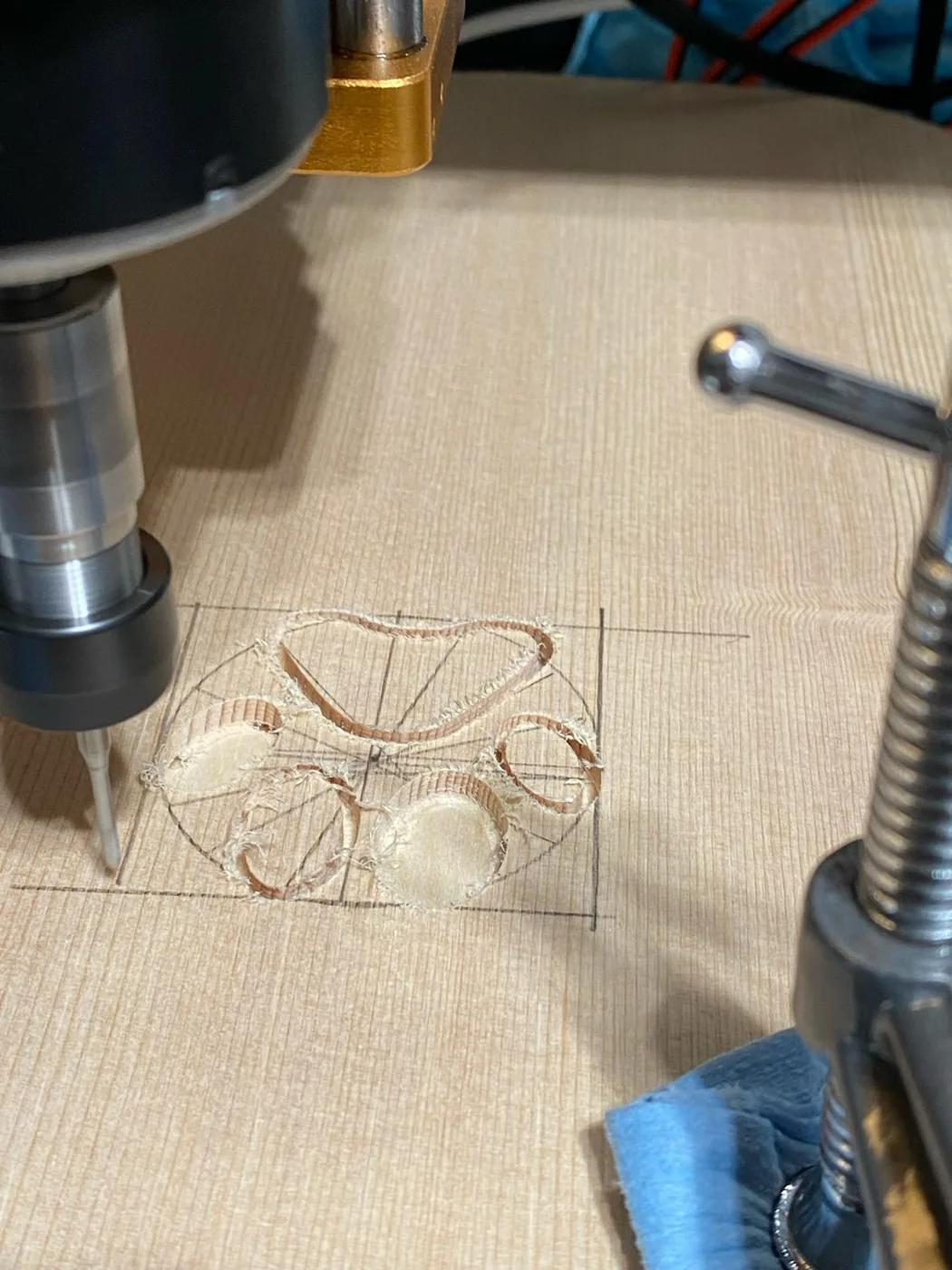
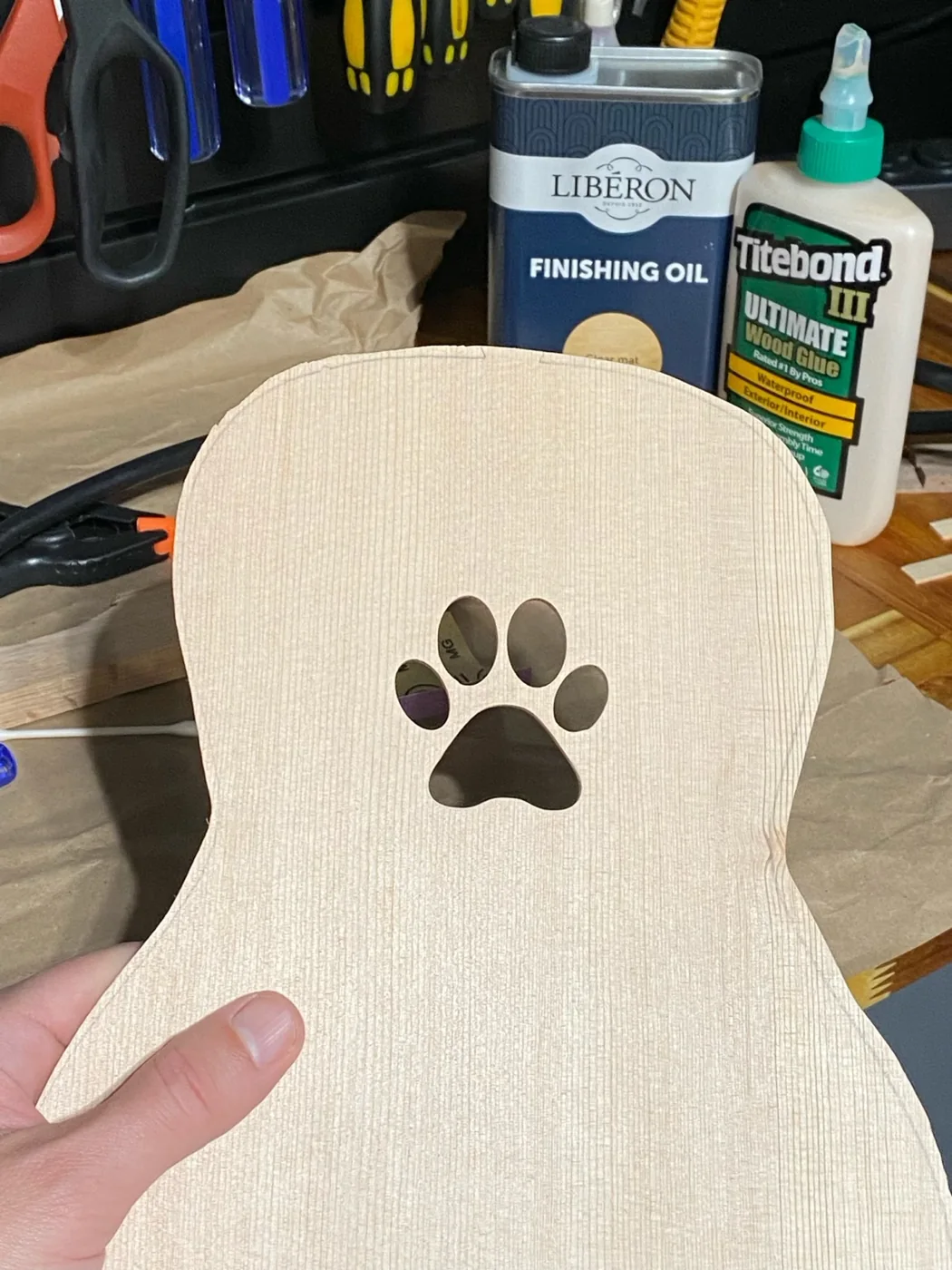
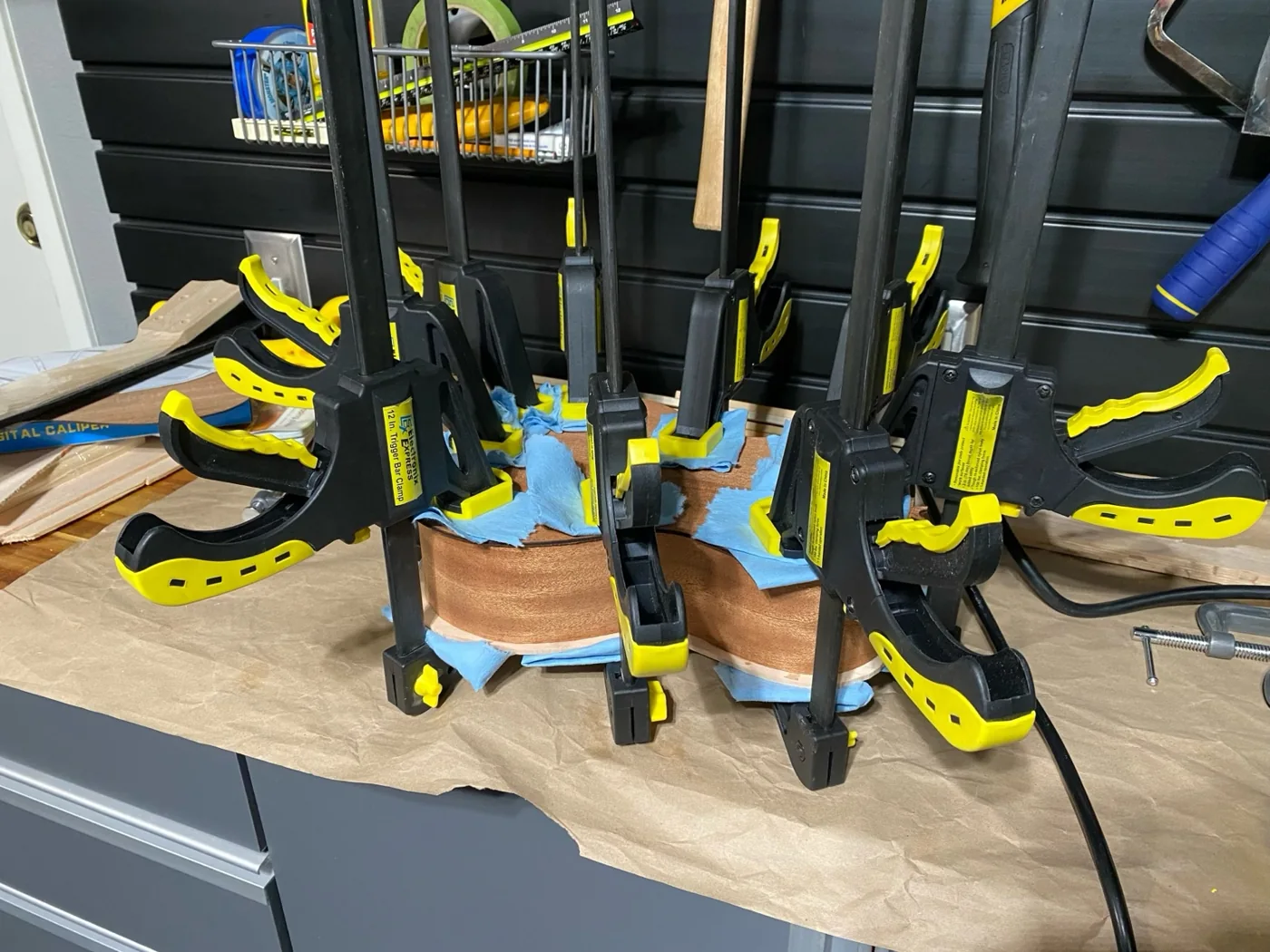
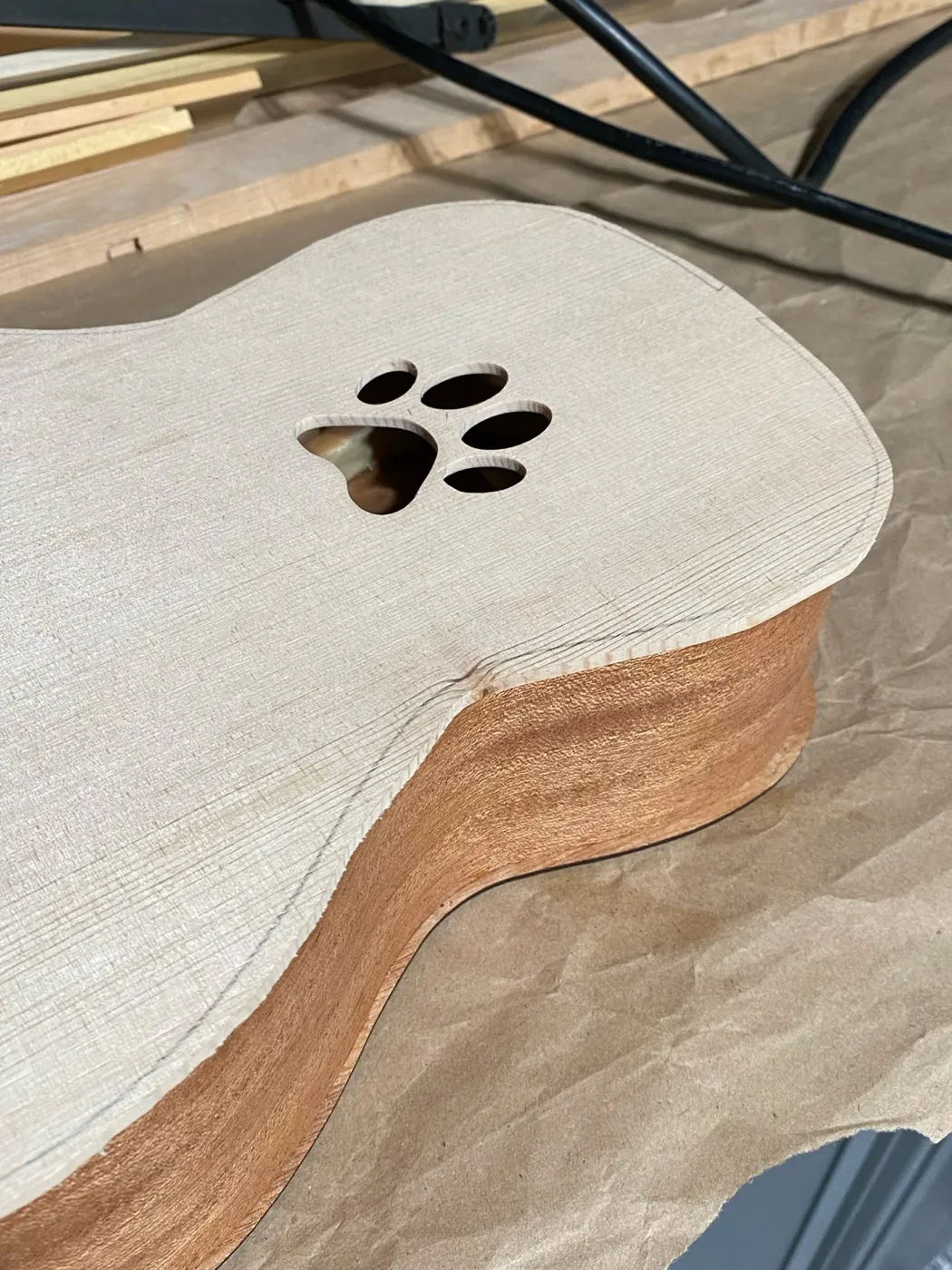
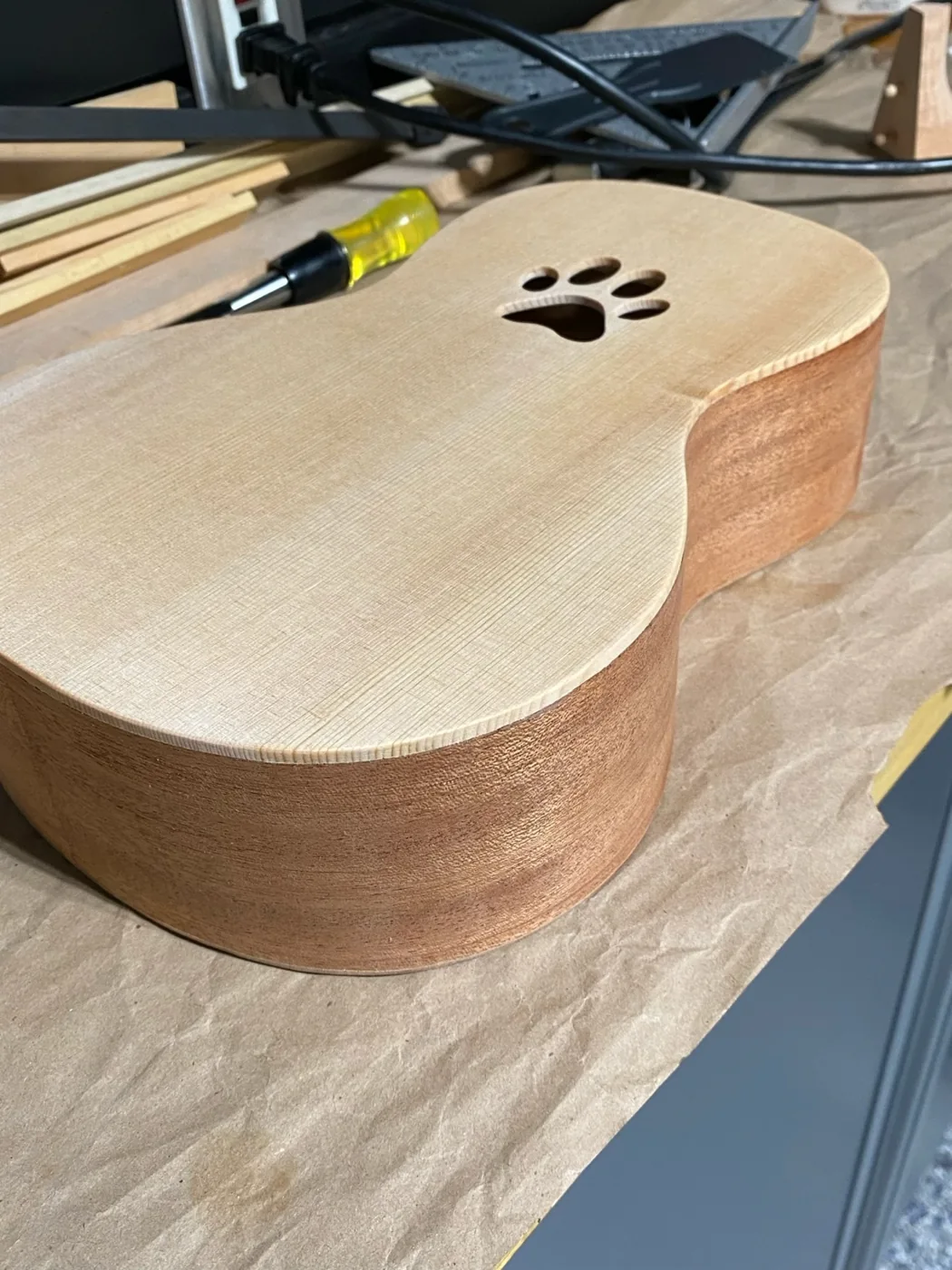
John’s original photographs document the transformation, alongside an editorial feature image.
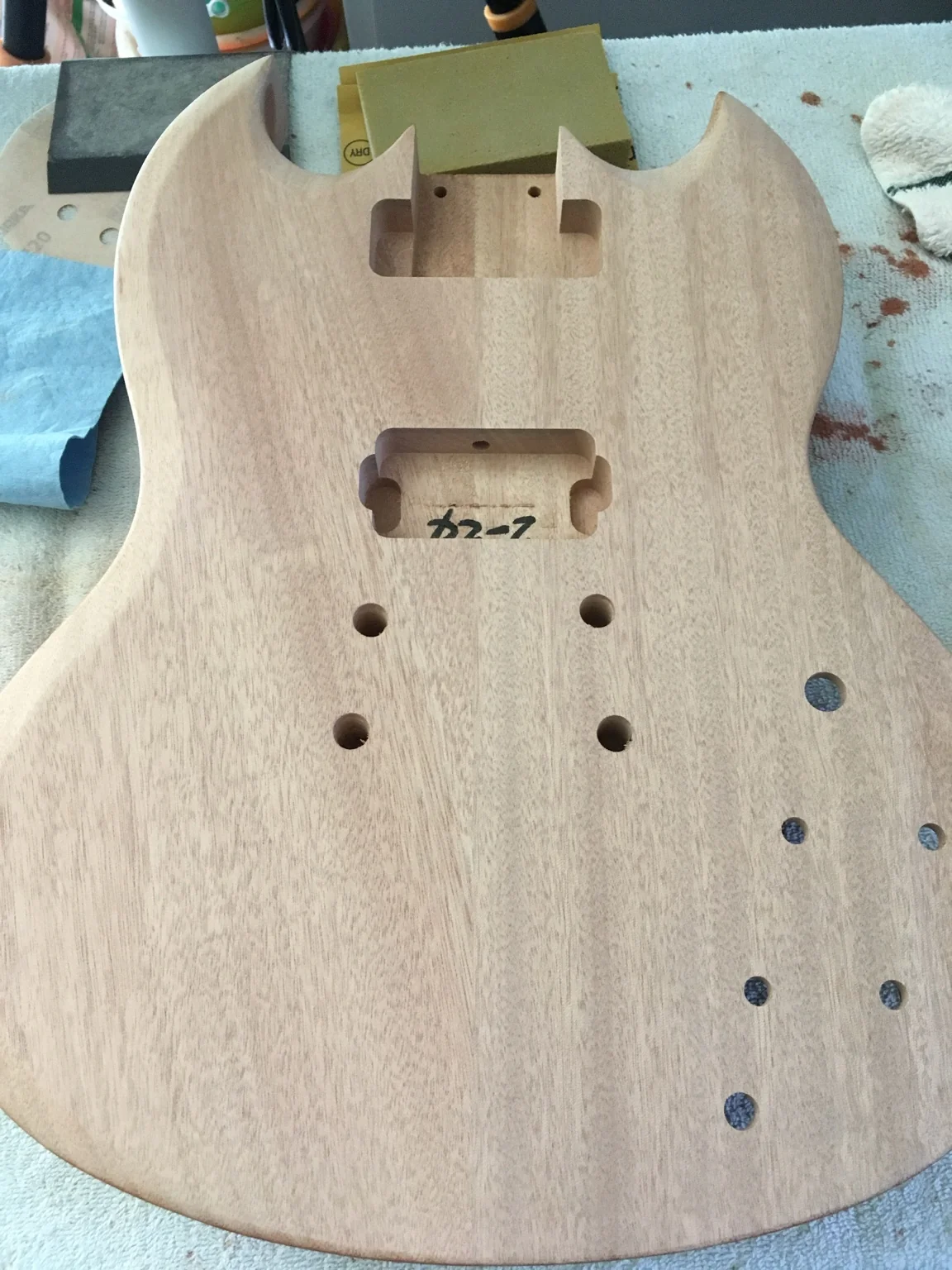



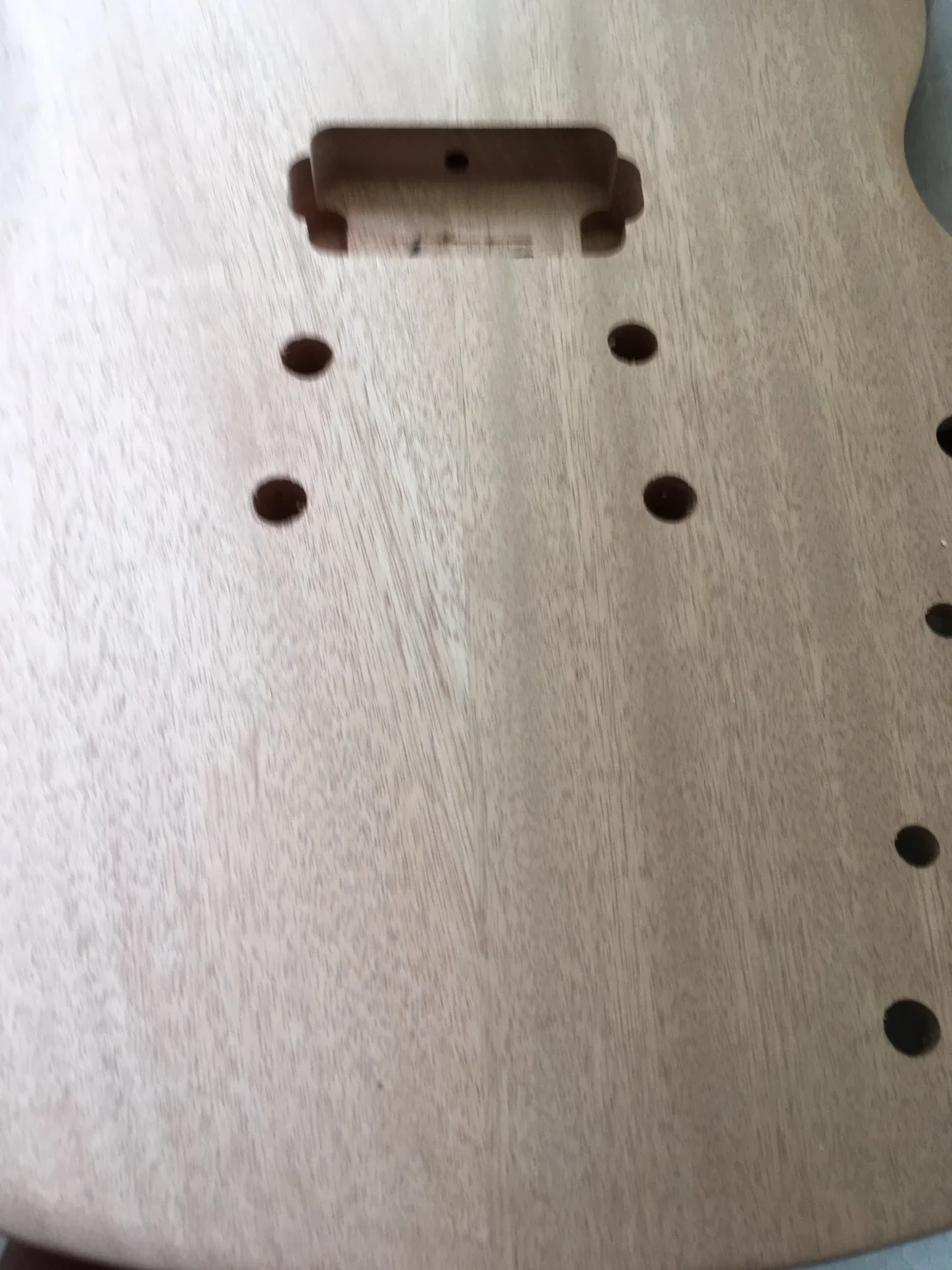
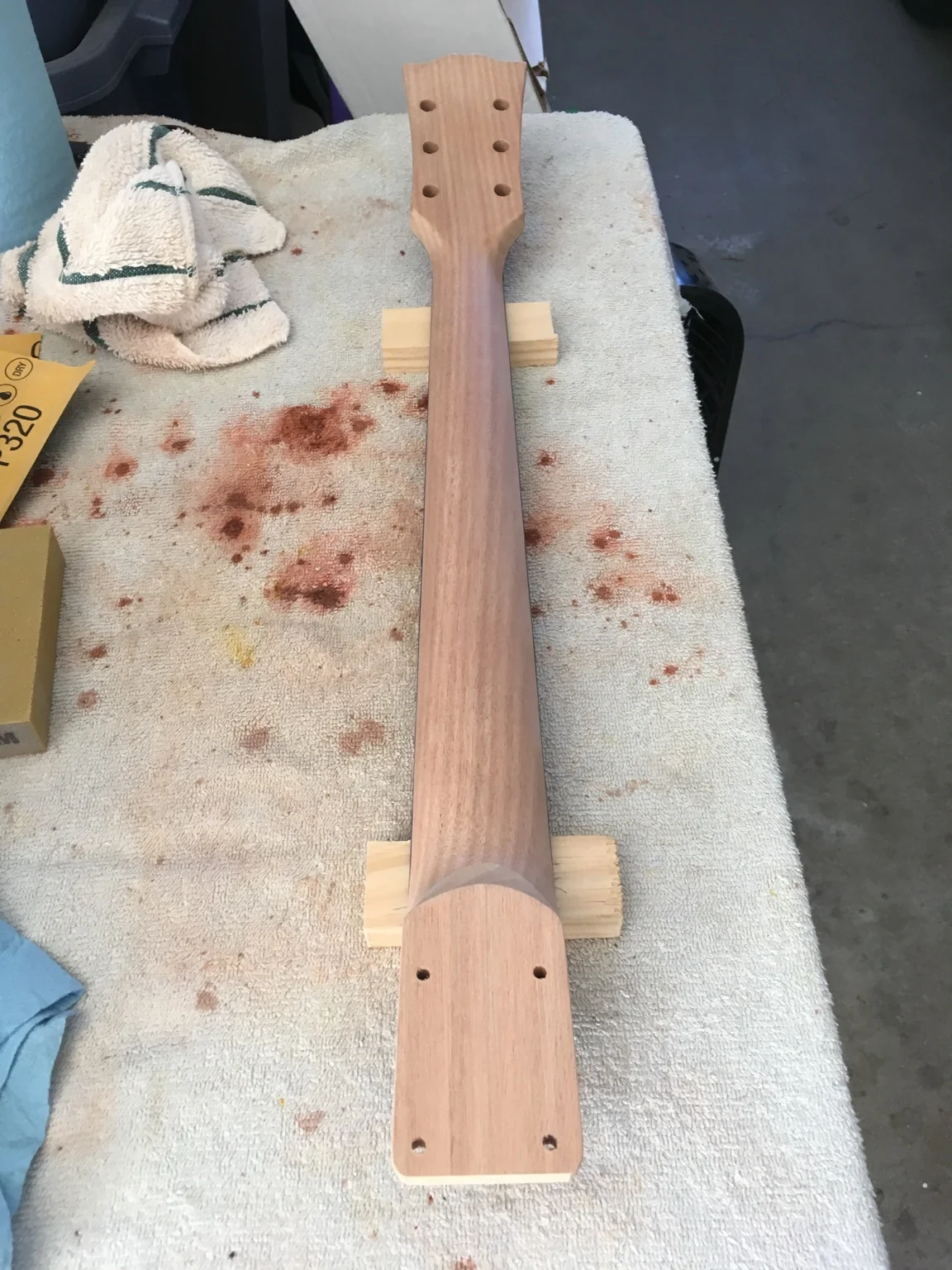
John shaped a poplar body with Baltic birch soundboards on the front and back, then applied General Finishes Cinnamon dye and thinned alkyd varnish. These original photographs trace the construction and finishing process.

Grain of the Desert Woodworks was born in the kitchen.
Concerned about the growing presence of microplastics in our food and the declining quality of mass-produced household goods, John and Denise were inspired to explore the art of handcrafted woodwork.
A longtime admirer of the luminous golden depths of tiger’s eye, Denise began collecting what she affectionately called precious woods—extraordinary pieces distinguished by their natural figure, intricate grain, and remarkable chatoyance.
John, whose experience creating custom wood art spans everything from handcrafted lyres and guitars to everyday cutting boards and vessels, brought his craftsmanship and artistic vision to their shared endeavor. Together, they experimented with custom-formulated finishes, treatments, and techniques designed to reveal the natural luster, depth, and shifting light within each piece of wood.
But something unexpected happened along the way.
As their collection grew, they discovered that some of these precious woods were simply too beautiful in their natural state to carve, turn, or reshape according to a predetermined design.
Their approach began to change.
Rather than shaping the wood to fit the object they envisioned, they began allowing the wood’s natural figure, form, and chatoyance to inspire the finished piece.
Nature became the artist’s guide.
The grain, shaped by time and the forces of nature, began telling its own story. From this evolving philosophy, Grain of the Desert Woodworks was born.
Drawing upon their science-based educational and professional backgrounds, their shared curiosity, and their mutual appreciation for handcrafted wood art, John and Denise approach each creation as a collaboration between nature and craftsmanship.
Every finished piece bears their shared signature, “Johnise,” a blending of their names that commemorates the creative partnership behind their work.
Nature creates the canvas. We reveal its character. Art completes the story.
Denise: [email protected] · Studio: [email protected]
Explore the intersection of art, natural history, and science.
The extraordinary beauty of chatoyance: where nature, light, and wood become art.
At Grain of the Desert Woodworks, we believe that some of nature’s most beautiful artwork is hidden within the grain.
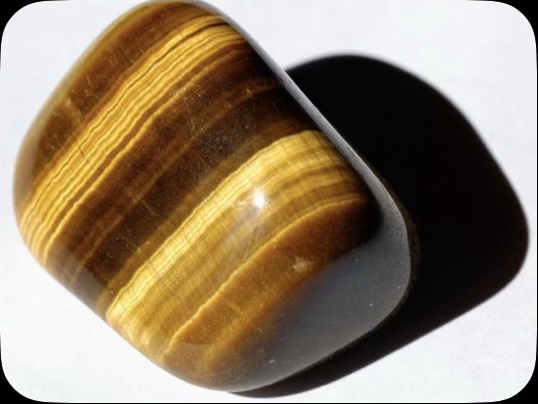
One of its most extraordinary qualities is chatoyance—the shimmering, almost three-dimensional movement of light across wood. As the viewing angle changes, ribbons of grain appear to glow, deepen, and shift beneath the surface.
This remarkable phenomenon is not unique to wood. It is also found in certain gemstones, including tiger’s eye and cat’s-eye chrysoberyl, where light creates luminous bands that seem to move within the stone.
Although their internal structures differ, these materials share something extraordinary: the ability to transform reflected light into an illusion of movement and depth.
To understand chatoyance, we must first look inside the wood itself.
Wood is composed of countless elongated cells, many of which are arranged along the direction of the tree’s growth. These cells form fibers and other structures that interact with incoming light.
In some trees, the grain grows in waves, curls, or other irregular patterns rather than following a relatively straight path. These variations may produce the beautiful figuring woodworkers describe as curly, fiddleback, quilted, or flamed.
When light strikes the surface, its reflection and scattering depend partly on the orientation of these underlying structures. Different portions of the grain appear brighter or darker depending on the direction of illumination and the viewer’s position.
As the wood or light source moves, those patterns of brightness change.
The result is chatoyance: a shifting, luminous appearance that can make the wood seem almost alive.
The grain itself does not move. What changes is the way light interacts with its structure.
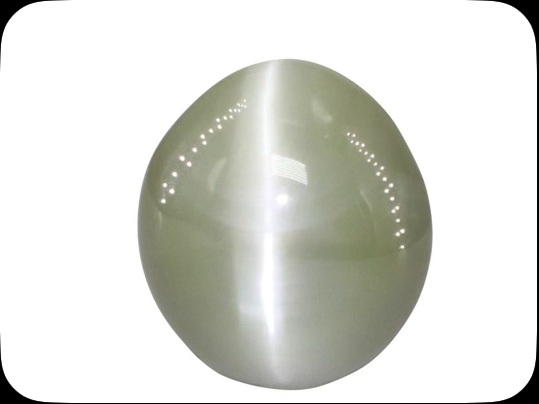
Further reading: Smithsonian National Museum of Natural History — Maharani Cat’s Eye.
The word chatoyance comes from the French expression for “cat’s eye,” a reference to the narrow, luminous band visible in certain gemstones.
Perhaps the most familiar example is tiger’s eye, a golden-brown variety of quartz.
Within tiger’s eye are closely aligned, fibrous mineral inclusions. These structures interact with light to produce the characteristic silky bands that seem to glide across the stone as it turns.
In cat’s-eye chrysoberyl, tiny, similarly oriented inclusions scatter and reflect light. When the gemstone is polished into a rounded shape called a cabochon, its curved surface helps concentrate the optical effect into a distinct luminous line resembling a cat’s pupil.
Wood creates a related visual impression through a different natural architecture.
Rather than mineral inclusions enclosed within a crystal, wood contains elongated cellular structures whose orientation influences how light is reflected and scattered.
Where the grain curves and changes direction, the resulting variations in brightness can produce broad, flowing ribbons of light.
In both wood and gemstones, the beauty comes not merely from color, but from the relationship between light, internal structure, and the observer.
Chatoyance is an inherent optical quality of the wood. It cannot simply be painted onto a surface or created by applying a glossy coating.
However, skilled preparation can make an extraordinary difference in how clearly the effect is seen.
Careful cutting and shaping determine how the grain is presented. Meticulous sanding reduces surface irregularities that scatter light and obscure the figure. Thoughtfully selected finishes can enhance clarity, contrast, and the appearance of depth.
The result is not the creation of beauty where none existed, but the revelation of something nature has already made.
At Grain of the Desert Woodworks, we select and prepare our wood with an eye toward revealing these natural qualities.
Through careful shaping, meticulous surface preparation, and thoughtful finishing, we reveal the depth, warmth, and movement already present within each piece.
Our engraved artwork is designed to complement this beauty, not overwhelm it.
Nature creates the canvas. We reveal its character. Art completes the story.
In a universe filled with diamonds and gold, perhaps the greatest treasure is something growing quietly here on Earth.
For thousands of years, humanity has treasured gold, silver, platinum, and diamonds. We mine them, collect them, exchange them, and transform them into objects of beauty.
Their rarity on Earth helps explain their value.
But what happens when we look beyond Earth?
The universe contains astonishing quantities of the very materials we consider precious. Some exist within distant stars, others inside planets, and still others within asteroids traveling through our solar system.
And then there is wood.
A material so familiar that we build homes with it, make furniture from it, and sometimes burn it for warmth.
Yet wood possesses a remarkable distinction: it has never been confirmed anywhere beyond Earth.
To appreciate that distinction, let’s first explore some of the universe’s extraordinary treasures.
Deep within the giant planets Neptune and Uranus, scientists believe something extraordinary may happen.
Under immense pressure and heat, carbon-containing molecules can break apart, allowing carbon atoms to form diamonds.
Scientists have recreated relevant conditions in laboratories and observed tiny diamonds forming.
The prevailing hypothesis is that diamonds may form and descend through the interiors of these planets—a phenomenon popularly called diamond rain.
Imagine a world where diamonds are not precious stones locked away in jewelry boxes, but crystals forming deep inside a planet.
We have not directly witnessed diamond rain on Neptune or Uranus. Nevertheless, laboratory experiments offer intriguing evidence that nature may produce diamonds in environments far removed from Earth.
Even more remarkable, scientists have discovered microscopic diamonds within meteorites.
Some meteorite nanodiamonds are associated with material that originated before our Sun formed approximately 4.6 billion years ago. Researchers have identified isotopic signatures in these tiny grains that point to processes occurring in ancient stars, although the precise origins and ages of individual diamonds are not always established.
Such ancient material is known as presolar material.
It preserves clues about the stars and processes that distributed matter throughout the galaxy before our solar system existed.
A diamond need not be large to possess an extraordinary history.
Some of the universe’s most fascinating treasures are almost unimaginably small.
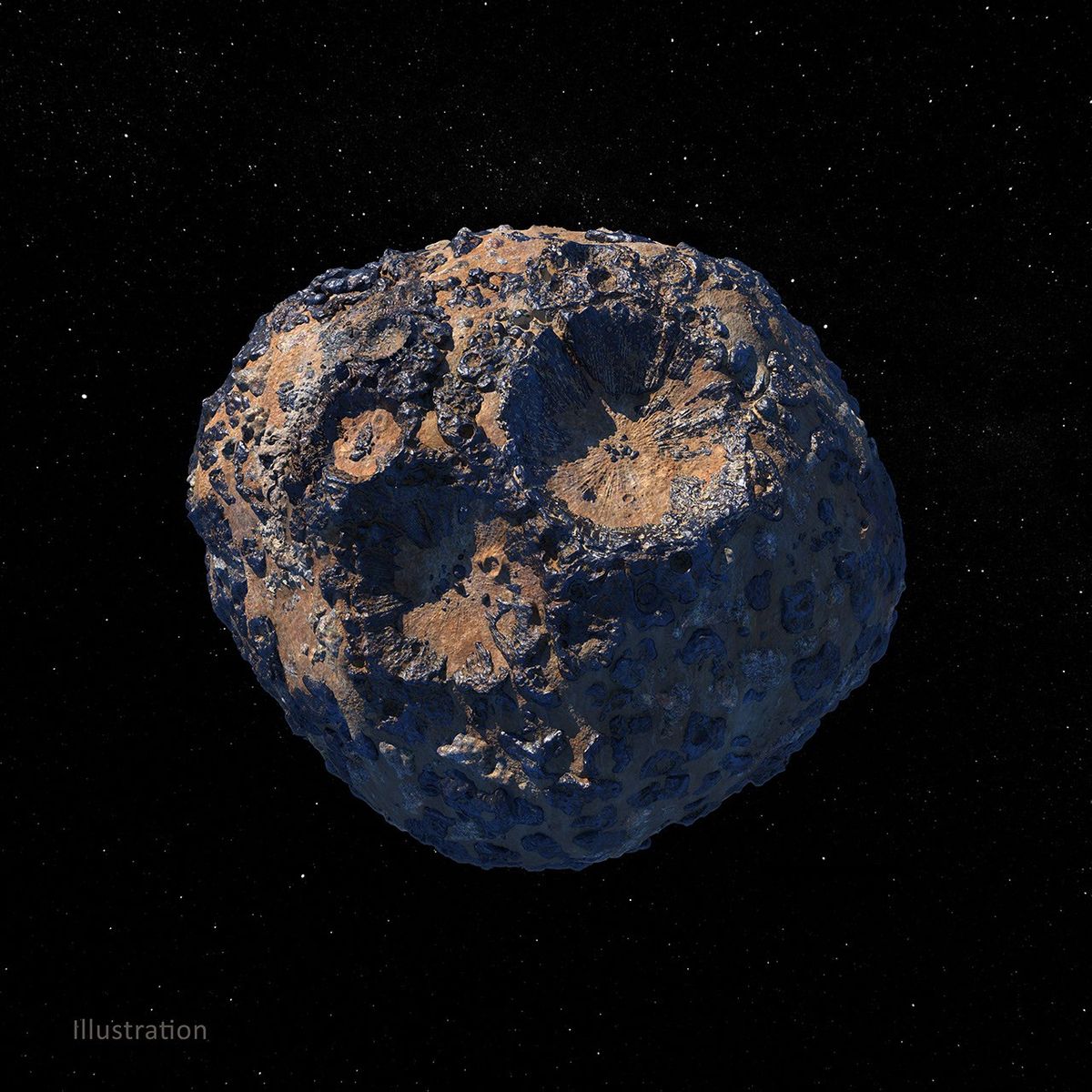
Between Mars and Jupiter lies an asteroid named 16 Psyche.
Approximately 173 miles across at its widest point, Psyche is believed to contain substantial quantities of iron and nickel.
NASA estimates that metal may account for roughly 30% to 60% of its volume.
That is an extraordinary amount of metal concentrated in a single celestial object.
NASA launched a spacecraft toward Psyche in 2023, with arrival planned for 2029. Scientists hope the mission will reveal whether this unusual asteroid preserves material from the interior of an ancient planetary building block.
Although popular descriptions sometimes portray Psyche as an enormous treasure chest of gold and platinum, its precise composition remains uncertain. Its known scientific significance lies primarily in its iron-rich nature.
Nevertheless, Psyche illustrates an astonishing fact: some celestial bodies contain vast quantities of material we normally associate with mines deep beneath Earth’s surface.
Where did the gold in our jewelry come from?
The answer begins long before Earth existed.
Some of the universe’s heaviest elements form during extraordinarily energetic cosmic events.
In 2017, astronomers observed the collision of two neutron stars approximately 130 million light-years away.
The resulting explosion, called a kilonova, provided powerful evidence that such collisions create the conditions necessary to produce heavy elements, including gold and platinum.
Theoretical models suggest that neutron-star mergers can produce enormous quantities of heavy elements—potentially several Earth masses of newly synthesized material in a single event. The precise quantities of individual elements, including gold and platinum, remain subjects of scientific investigation.
Research also suggests that other extraordinary events, including powerful eruptions from highly magnetized neutron stars, may contribute to the universe’s supply of heavy elements.
The gold we treasure on Earth is part of a much larger cosmic story.
We have identified diamonds in meteorites.
We have discovered metal-rich asteroids.
We have observed the cosmic events that forge precious elements.
And we have found planets orbiting stars across our galaxy.
But we have never confirmed a tree growing anywhere beyond Earth.
Not a forest.
Not a fallen branch.
Not a single piece of extraterrestrial wood.
Of course, that does not mean wood cannot exist elsewhere. The universe is vast, and our exploration has barely begun.
But as far as scientific observation has established, Earth remains the only known home of wood.
Gold is an element. Diamond is a crystalline form of carbon.
Wood is something else entirely.
Wood is a material created by life.
It requires a remarkable chain of biological and environmental circumstances.
Trees grow by capturing energy from sunlight, absorbing water and carbon dioxide, and building intricate structures of cellulose, lignin, and other organic compounds.
Season after season, the tree develops new layers of tissue.
Those layers become the grain we admire.
Changes in growth, genetics, and environment can produce extraordinary natural patterns: curls, waves, burls, quilts, and shimmering figures.
Each board carries the physical history of a living organism and a record of events in the tree’s life.
No two pieces are precisely alike.
A diamond may reveal something about the immense pressures within a planet.
Gold may tell the story of ancient stellar collisions.
But wood tells the story of life itself.
At Grain of the Desert Woodworks, we approach wood with that sense of wonder.
We seek out pieces with distinctive grain, character, and natural beauty.
We pay particular attention to chatoyance—the remarkable way light appears to move through certain figured woods, revealing shimmering patterns and extraordinary visual depth.
Through careful preparation and finishing, we work to bring that hidden beauty forward.
Our artwork is then composed to complement the wood’s natural character, allowing the material itself to remain an essential part of the finished piece.
We believe the most beautiful works of art begin by recognizing the beauty nature has already created.
Perhaps one day humanity will discover forests on another world.
Perhaps somewhere among the stars, life has created forests and materials more extraordinary than anything we have imagined.
But today, among all the cosmic treasures we have discovered, wood occupies a special place.
It is familiar, useful, renewable when responsibly cultivated—and the product of a biological history we have confirmed nowhere else.
So the next time you hold a beautifully figured piece of wood, consider its story.
The universe may be filled with diamonds, gold, and platinum.
But the wood beneath your fingertips came from something even more remarkable.
A living tree.
On a living planet.
Nature creates the canvas. We reveal its character. Art completes the story.
Grain of the Desert Woodworks
* NASA: Where Does Gold Come From? NASA Data Has Clues (2025) * NASA: Psyche Mission Overview * NASA: Webb Makes First Detection of Heavy Element from Star Merger (2023) * Lawrence Livermore National Laboratory: Scientists Create Diamond Rain (2017) * NASA research: Presolar Grains in Meteorites
Scientific note: Wood is known only from Earth; its absence elsewhere has not been established. Extraterrestrial diamonds, metal-rich asteroids, and heavy-element production are supported by different kinds of evidence, while diamond rain on ice giants remains a hypothesis.

High in California’s White Mountains, where fierce winds sweep across rocky slopes and winter temperatures plunge far below freezing, an extraordinary tree continues to live.
Its name is Methuselah.
A Great Basin bristlecone pine, Methuselah is more than 4,800 years old—one of the oldest verified living individual trees on Earth.
To protect this extraordinary living treasure from vandalism, the U.S. Forest Service keeps Methuselah’s precise location undisclosed.
Methuselah’s remarkable age was established through the study of tree-ring patterns in core samples collected in 1957. Already more than 4,789 years old when that age was reported, the tree continues to grow today—its ancient history preserved within its wood.
It was already growing centuries before the great pyramids of Egypt were completed.
For nearly five millennia, this remarkable tree has endured drought, bitter cold, violent winds, and countless changes in the world below.
And through it all, Methuselah has been quietly writing its autobiography.
One ring at a time.
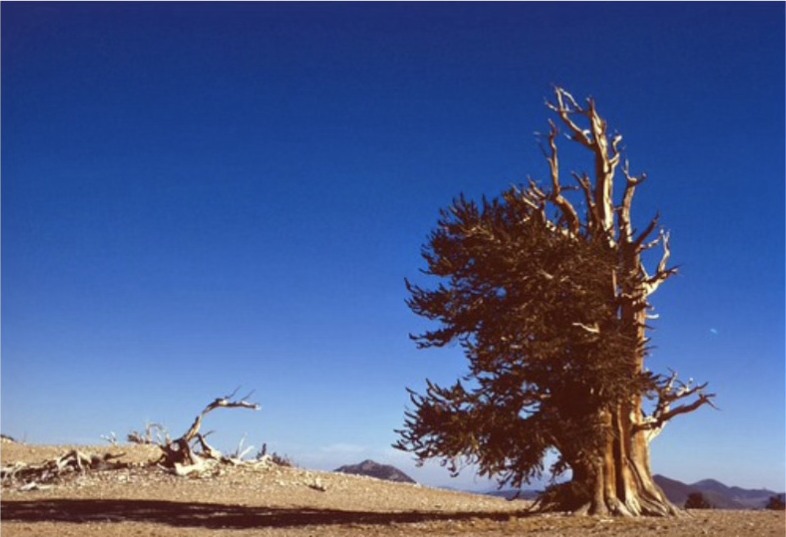
“The Inyo National Forest is home to many bristlecone pines, thought to be the oldest living organisms on Earth.”
Photograph: Eric Knapp / USDA Forest Service
Source: USDA Forest Service — Research Natural Areas
The photographed bristlecone pine is not identified as Methuselah.
The science of reading tree rings is called dendrochronology.
Scientists can examine the width, density, and patterns of annual growth rings to reconstruct aspects of the environment in which a tree lived.
A narrow ring may reflect a year of drought, cold, or difficult growing conditions. A wider ring may indicate a more favorable season.
By comparing the rings of multiple trees, scientists can reconstruct patterns of rainfall, temperature, and environmental change extending far beyond the beginning of written weather records.
Imagine what Methuselah’s rings represent.
Thousands of summers and winters.
Centuries of changing climate.
Periods of abundance followed by years of extraordinary hardship.
An environmental history written not in ink, but in living tissue transformed into wood.
And here, our curiosity takes a more artistic turn.
What might Methuselah’s wood look like beneath its weathered exterior?
Could thousands of years of extraordinarily slow growth have created unexpected patterns of density, color, and grain?
Might the shifting orientation of its fibers produce delicate optical effects—perhaps even a subtle, hidden chatoyance?
We cannot know merely by looking at the tree.
Age alone does not produce chatoyance, and there is no established evidence that Methuselah possesses exceptional chatoyant figure. That phenomenon depends on the structure and orientation of wood fibers and their interaction with light.
But it is a wonderful possibility to contemplate.
What extraordinary beauty might remain unseen within a tree that has been growing for nearly five thousand years?
We hope it remains a mystery.
Methuselah’s greatest treasure is not timber that could be harvested, polished, or transformed into art.
It is the living tree itself.
Its continued existence allows future generations to study, admire, and protect an irreplaceable record of Earth’s natural history.
Most trees will never live for five thousand years.
But every tree records something of its life within its wood.
A change in rainfall. A season of vigorous growth. A struggle against wind. An unusual twist in the grain.
These are the natural signatures we find so fascinating.
At Grain of the Desert Woodworks, we work to preserve and reveal that character in responsibly sourced wood, transforming remarkable natural material into art intended to be enjoyed for generations.
Because every piece of wood carries a history.
And sometimes, the most beautiful thing we can do is allow that history to shine.
U.S. Department of Agriculture (USDA)
Methuselah, a Bristlecone Pine, Is Thought to Be the Oldest Living Organism on Earth
Historical information concerning Methuselah’s age, its discovery and scientific dating, and the protection of its location.
HISTORY
What Is the Oldest Tree in the World?
Historical context concerning Methuselah and other exceptionally long-lived trees.
University of Arizona — Laboratory of Tree-Ring Research
Dendrochronology and Tree-Ring Science
Scientific research concerning tree-ring dating, crossdating, and environmental reconstruction.
U.S. Forest Service — Forest Products Laboratory
Wood Handbook: Wood as an Engineering Material
Reference material concerning wood anatomy, grain structure, physical properties, and wood figure.
U.S. Forest Service — Pacific Southwest Research Station
Research Natural Areas
Source of the selected bristlecone pine photograph, credited to Eric Knapp / USDA Forest Service.
Grain of the Desert Woodworks
Nature made the first mark.
Questions about our artwork or future availability? We'd love to hear from you.
⌖ Joshua Tree, California